As a public facing media critic, there are certain sacrifices you have to make to your enjoyment of the media you love. It’s not deliberate, but it’s just a fact of the job.
When having opinions about video games becomes your job, your relationship with them inherently has to change. The work demands an analytical lens be applied to the medium, not only on titles you’re explicitly playing for review but basically everything. A game you’re playing in your free time might suddenly do something interesting worthy of an opinion feature. A podcast discussion might veer onto something you played recently. Something you played might be an important comparison point in later critical analysis.
Every game you play ends up, to some degree or another, being played for work. At the very least, every game gets played in a work headspace. It’s rare that a game is ever truly just for fun, unless you make a concerted effort to separate a game out as just for yourself.
The same is true of basically any media critique, be it music, TV, film, books, roller coasters, whatever it might be. To truly commit to being a critic is to sacrifice some piece of the thoughtless enjoyment that made you love the medium originally. To observe a medium too closely often removes some of the magic. It might be replaced with something new, a new appreciation and love born of understanding, but something uncomplicated is lost along the way.
Regardless of how directly your role as a critic intersects with news coverage, being the kind of person who reviews media usually leads to an increased awareness of industry news. It’s important to know what’s coming, it’s important to know how things are made, and inevitably it becomes important to know if something major happens that’s important context to how a work will be received. The work of a critic rarely leaves room to engage with media in a vacuum.
I love video games, that much has not changed in the decade I have been doing this job professionally, but that love for the medium has become more complicated over time. A big part of that is due to having to engage with how the art I love is made, and in particular the cycle of learning that something you love was built on the back of something you can’t support.
There’s a phenomenon I’ve been struggling to put a name to for a while, that I think I found a name for today. I’ve been struggling with the emotional whiplash of the “Milkshake Duck Jumpscare”.

For those unaware of the concept, the term Milkshake Duck has its origins in a 2016 Twitter post by a user named Ben Ward. Someone gets excited about a video of a cute duck drinking a milkshake. Moments later they’re informed that the milkshake duck is a racist. Something innocent and joyful quickly shut down by a revelation that renders enjoyment tainted with guilt. Momentary joy shut down by the reality that sometimes the media you enjoy is connected to something you’d never want to knowingly support.
The term milkshake duck has for a while now been internet shorthand for learning that something you love is connected to something unsavoury, usually right wing opinions or actions. It’s synonymous with the experience of finding joy in something simple, only to have to quickly reassess your relationship with it in a new context. It’s a concept that’ll likely be familiar to anyone particularly engaged in media critique, no matter the genre or medium of choice.
Over the past four years, stories of abuse in the video game industry have become all too common. This isn’t to suggest that abusive practices in the industry are a new phenomenon, but a particular wave of investigative reporting that summer kicked off a tidal wave of stories that has seemed not to calm since.
Ubisoft workers sexually harassed, Activision Blizzard HR protecting higher ups from complaints, CEOs accused of harassing workers to suicide, Nintendo of America contract workers excluded and treated as lesser than their colleagues, mass layoffs, crunch working workers to their breaking point, ever shrinking wages for all but the shareholders, and so many more examples.
I have no idea how much more common these stories have become, or if I’m just more aware of them than I was before. It’s tiring to learn that things you love are made on practices you don’t want to support.
But there’s an experience more tiring to me than simply learning a game company whose titles you’ve enjoyed for years is secretly a bit of a milkshake duck. One I’ve found particularly damaging my ability to get excited for the medium I supposedly love.
I’m struggling to emotionally process Milkshake Duck Jumpscares.
This example I am going to share isn’t video game specific, but it’s the most recent example of this phenomenon I have experienced, and the one that prompted me to sit down and write this morning. It conveys the point well regardless of its medium.
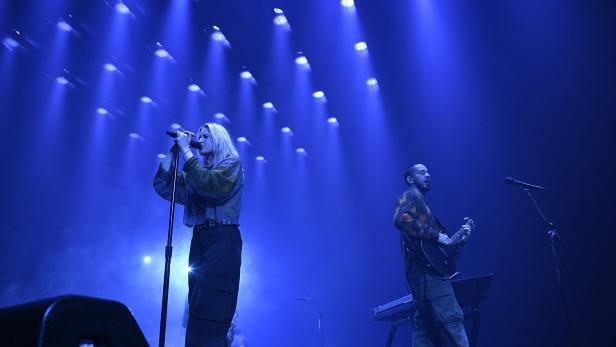
Last night, I watched a Livestream in which Linkin Park, a band hugely instrumental to shaping my tastes in music, played an hour long set featuring a new female vocalist named Emily Armstrong. Given the band’s understandable hiatus since the death of vocalist Chester Bennington back in 2017, it was an emotional experience seeing someone new take on the daunting task of trying to step into the shadow of an unimaginably huge legacy. I went on an emotionally invested journey watching her go find her footing as the set went on. I cheered internally when Numb, a song about trying to live up to an overwhelming legacy, seemed to be a turning point where her confidence noticeably improved. I was fascinated watching her fight to win over a crowd primed not to accept her presence. I left excited for the future of a band I assumed lost to the past.
12 hours later, after some sleep, I wake up to multiple messages letting me know she’s a scientologist who two years ago wrote a letter to a judge in defence of an accused, and in 2024 convinced, rapist.
This is the Milkshake Duck Jumpscare. A brief burst of excitement about something new, incredibly quickly revealed to be a milkshake duck. A rise and fall in close succession. An emotional trebuchet.
I suppose it’s something closer to that original tweet’s exaggerated example. Literally moments afterfinding joy, you learn the milkshake duck is racist. It’s that proximity all too often ignored in the original tweet. That proximity that really stings.
The thing about a milkshake duck jumpscare is the ripples its proximity to excitement end up having, at least for me. It’s an experience unique in its ability to make me feel defeated, like excitement about new things is a futile act I’m foolish for letting myself engage in. It taints all it touches, and acts as a hesitancy to getting excited again in future.
Additionally, the example of Emily Armstrong reveals something deeper about the effects this can have. Often, a later update can struggle to restore the excitement that one had before. The hesitancy to trust is now set in.
24 hours later, things were looking better on paper. Armstrong had issued a statement online clarifying that she regretted supporting her former friend, and stands firmly and vocally against his crimes. Her status in the church of Scientology, while not denied, was clarified as one of birth, potentially complicating her ability to speak out against a cult she may still have family within.
But still I was hesitant. Returning to excitement felt risky. I’d been reminded of the risks of excitement, and the uncomplicated hype i previously felt was now forever going to be a little more complicated. I’d lost some piece of innocent thoughtless joy.
A few years back, I recognised a trend in my favourite indie game releases. All of them seemed to be handled by one publisher, Annapurna. My all time favourite video game was one of theirs, Sayonara Wildhearts. Donut County, Cocoon, Thirsty Suitors, Stray, Solar Ash, If Found, Florence. They had an unbelievable track record as a publisher of curating experiences from different developers that consistently perfectly matched my tastes.

No sooner had I verbalised this, made it known to the world and myself that Anapurna was a name I trusted to create things I would generally love, the news dropped that they had engaged in pressuring developers with unreasonable deadlines, and in multiple cases ignored pleas from workers within studios they were publishing to protect them from abuse from auteur studio figureheads.
No sooner had I put into words that this was a company whose games I felt safe getting excited for, within a day I learned I had to caveat my praise of titles they were associated with.
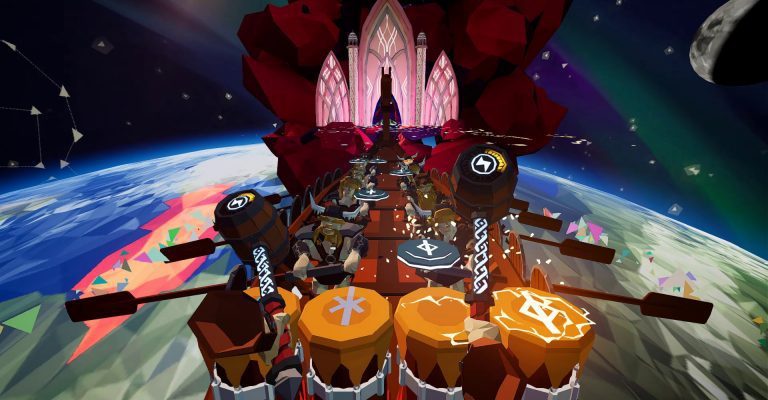
When the PSVR 2 launched back in February of 2023, I got really into a game called RagnaRock, a viking themed VR drumming game. In particular I found this one track that was my favourite to drum along to, a song called Hootsforce by Gloryhammer.
I posted a video of myself playing the song in game, and talking about how much I was enjoying the game. About five minutes later, I learned that Gloryhammer had been involved in a controversy involving a horrifically sexist and racist message thread between many of the band’s members.
That one’s maybe on me, I should have known better than to not Google a band in a viking metal game to see if they were controversial.
I haven’t played RagnaRock since. The game was fun, but I can’t untangle it from the feeling of a Milkshake Duck Jumpscare. I can’t untangle it emotionally from the feeling of getting excited, only to quickly learn there’s some secret evil involved in what a few minutes ago was hype.
That feeling of having to abruptly cut off a prior feeling of excitement is like a knife twisting. It hurts in a uniquely unpleasant way.
Now, in none of these cases am I upset at the people who told me these things. I needed to know, and they were right to tell me. That doesn’t change the fact that these moments are tough to process, and they make getting excited about things a vulnerable and risky act. They make excitement something felt with hesitancy. They make excitement a calculated risk.
I want to be someone who gets excited about things. I don’t want, as I get older, to lose the magic of hope. I don’t want to be a cynic who assumes the worst. I want to believe that there are thing out there I can enjoy uncritically at face value, and won’t later learn I have to caveat with disclaimers. I want to view the mediums I love through the starry eyed lenses of when I was 16, not yet in the industry, dreaming of a career proximate to creative works I felt deserved to be taken more seriously.
I don’t have a solution, right now, for how to keep that excitement. I am at least aware of my struggles, and what’s causing them, enough to make a conscious choice to be excited as an act of defiance. Hopefully putting words to the page will make this more tangible, make the fight one I am more determined not to lose.
My best guess for now, the route through this is to remind myself of the things I’m excited for that have not been impacted. To remind myself that these negatives are a minority of experiences, even if they feel constant. The human brain’s much better at remembering negative experiences than positive ones, and the best counter to that might just be to consciously think about some things that to my current knowledge I can still be excited for without caveats.
All Will Rise is a deck building courtroom drama I saw at Gamescom about the challenges of leftist political activism that truly feels like a magical experience.
There’s a musician called Dessa whose album Chime is a feminist masterpiece I listen to when I need boosting up emotionally.
There’s a second season of Severance coming next year, an amazing TV show about people whose work and home minds are separated into separate disconnected identities, who have to solve a mystery split across two half lived realities.
I’ve worked on games releasing in the next year or so that I am incredibly proud to have been involved in, and can’t wait to get to talk about.
And yeah, any of these things could end up getting connected to something shitty. By presenting these examples here I might be inviting the internet to tell me I’ve missed something terrible about them too. But if that happens, I’ll just replace them with new things to be excited by. I’ll bury the rare examples of negatives tied to media I love with another 2-3 examples of something I’m excited for that still seems fine. I’ll remind myself there’s infinitely more to be excited about than disappointed by.
I’m trying not to give up on excitement, even when it so often feels like it’s inviting the pain of being shut down.
Categories: Gaming, Music, TV and Film


 LauraKBuzz.com
i personally can still enjoy pieces of media even knowing that people involved in them are assholes, like Iced Earth for example. Learning that their guitarist was involved in January 6th was dissapointing for sure but I wasn’t going to tar and feather the rest of the band(who did not support his actions)and I can still enjoy their music regardless. I live by the adage “separate the art from the artist”, there are exceptions of course, I won’t for example buy hateful games on Steam that were made by one person solely as a personal attack on marginalized people, not even as a joke and I won’t listen to music artists that are outright neo-nazis and preach bigotry and hatred.
For Ubisoft and Activision I can still enjoy their games as hundreds of people worked on them so it feels unfair to punish them for what the higher-ups, it’s not like a boycott would make any difference to them either, I think the best thing is to raise awareness of their actions and call them out for it publicly.
The Emily thing is unfortunate but I can’t blame her as the Church is notorious for making the lives of those trying to leave Scientology miserable(and that’s something I hope Chester’s son realizes), i’ve heard that was also the reason why all those cast members of That 70s Show wrote that letter in support of Masterson-because the higher-ups in the church ordered them to do so and they were concerned about what the members in positions of authority in other institutions could potentially do to them if they were to speak out against Masterson so in light of that i’m not going to personally judge Kutcher, Kunis and the others and will still enjoy their work but I can’t blame others for being put off by it.
For me it’s worse when the person isn’t an outright asshole and are just plain ignorant about certain things, like say Alice Cooper, Paul Stanley of KISS and Dee Snider of Twisted Sister, they’re mostly decent people but they sure do have misguided views on trans people.