
2024. It sure was a year. All 12 months of it, definitely a year that happened.
Well over 300 days in it, many of which had new video games for sale.
One journey around the sun for the earth, as we continue to make electronic distractions from the nature of our continued journey hurtling uncontrollably through space.
I played a lot of video games in 2024. Too many video games, one might say.
My job is professional video game opinion haver, and I sure did play a large number of games looking for things that I could tell you were worth also making the time to experience.
The following is a list of the video games from 2024 that I wanted to give awards, because I thought they did something notable or worthwhile that I appreciated.
It’s not a nicely rounded number like a top 10 list, because I liked an awkward number of things that I wanted to celebrate.
It’s also not in a ranked order, because each of these games I thought was great for a totally different and hard to directly compare reason.
Maybe I’ll crown an overall Game of the Year winner, maybe not. Who can say.
Certainly not me, this is my last work week of the year and I’m working out a structure of this awards list as I go.
There is no plan, I am truly just winging this.
So, with no further introductory waffling, here are 18 games from 2024 that I thought should get an award, of which only three or four are ones that I have to give disclosures about conflict of interest with, which I think is a pretty decent ratio all things considered.
Best Game at Capturing my Religiously Uncertain Teenage Years: Indika

When I was in my mid to late teens, I had a crisis of religious faith.
I grew up Christian, going to church with my mother on Sundays, evening youth group meetings twice a week, and even helping run my church’s tech desk for several years.
Sure I had questions about how my faith lined up with my understanding of science and how it explained the nature of the world, but I was able to come to answers that I found personally satisfying to those questions of literal fact versus my religious faith.
For me, the breaking point in my faith came as a result of my journey as a trans woman.
I started to ask questions that I found harder to answer.
Why would an all powerful god create me as someone whose exterior body and internal experience differed so wildly?
How should I navigate choosing between unhappy suffering with my body, and making changes which would necessitate altering god’s original design for me?
Would transitioning be perceived as contradicting God’s flawless design for my life?
The problem that I experienced was that, when I brought these doubts to my pastor, I was made to feel that the very act of questioning my faith was, in and of itself, a sign of religious failure.
Religious doubt was a sign of the devil trying to worm his way in and attack my relationship with god.
The problem is, the devil was making some really compelling points about the contradictions inherent in my faith.
In a world where I couldn’t be honest about those doubts for fear of being seen as impacted by sin, I journeyed alone with those doubts, the devil personified, a journey that ultimately ended with my walking away from my belief in christianity.
There are times I miss the comfort and certainty that religious belief brought me, but after being made to walk that road alone, something in me changed.
I might have wanted to still tell myself I believed, but true belief isn’t something one can manifest through sheer force of will alone.
I might not have been ready to be a disbeliever, but the undeniable truth was that I no longer believed.
I know I’ve not really spoken much about Indika itself during this award explanation, but that’s because Indika is a relatively short and linear narrative game, and one that I think I do a greater service by discussing my relationship to it rather than going too into depth on its own specifics.
Indika is maybe four hours long, and follows the story of a nun who finds herself visited by the devil while trying to deliver a letter to a religious figure a few days walk away.
The game explores the nature of religious faith, and how religious contradictions can turn into doubt when isolated from the context of the church.
Indika is a fascinating game, and one that I found particularly effective as someone who spent most of my young life as a believer.
It explores the fear and self loathing that can come with religious doubt in really interesting ways, and the experience of clinging onto belief in a religion whose followers seem perhaps to want you expelled from their ranks.
Indika is a masterful video game, and one that did a wonderful job of forcing me to explore feelings that I hadn’t taken time to really explore in many years.
Best Soulslike with a Huge Gun and Woke Politics: Another Crab’s Treasure
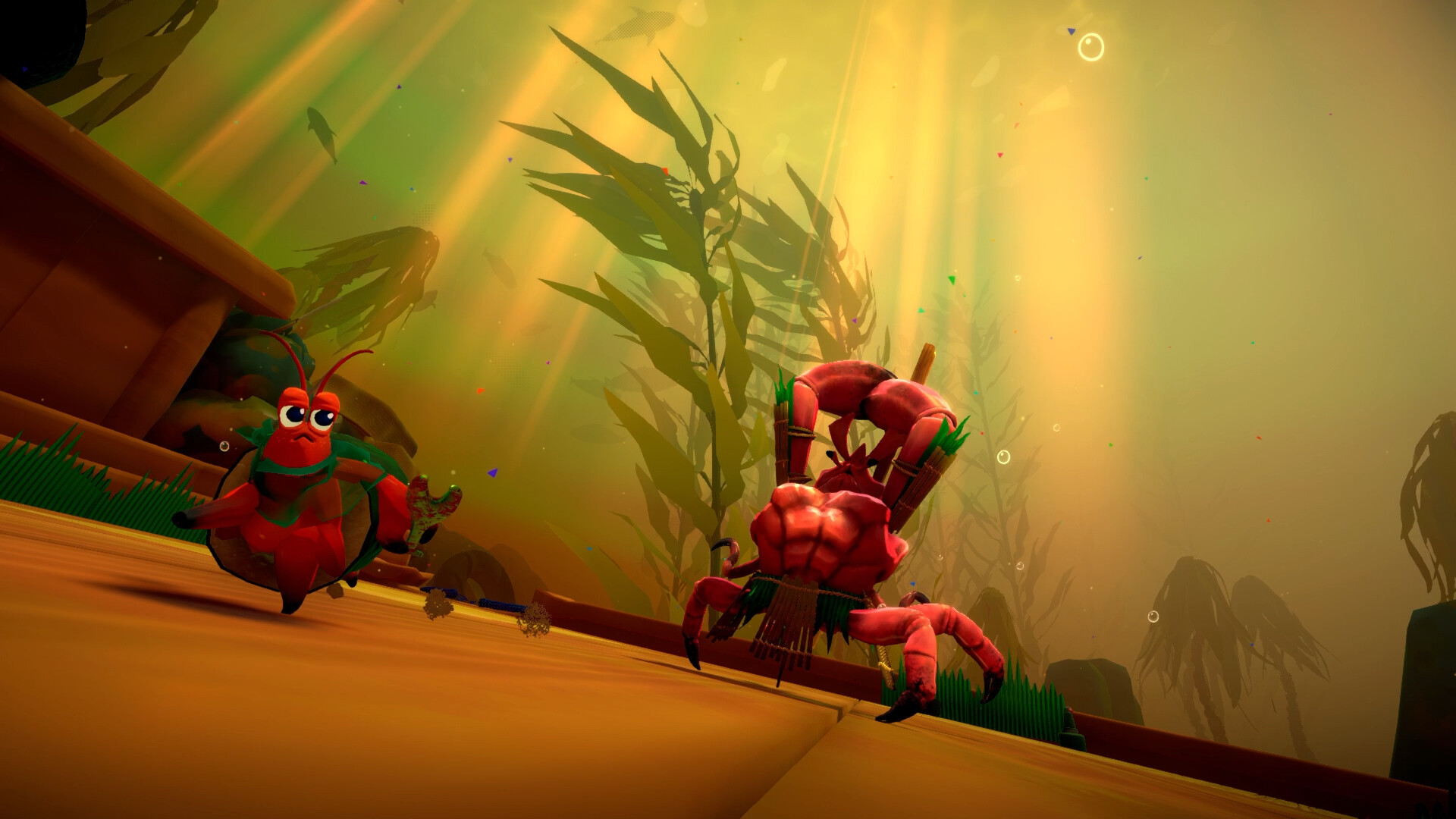
On the surface, Another Crab’s Treasure is a pretty easy game to explain – It’s a colourful Dark Souls inspired game where you play a Hermit Crab attacking enemies using a fork, wearing trash as temporary shells, trying to get your home back from a loan shark.
Also, you can give the little crab a huge handgun, and that’s pretty funny.
Now, as someone really big into advocating for video game accessibility, Another Crab’s Treasure was a really notable release this year in no small part because of how it demonstrated how the Soulslike genre could integrate Celeste style granular difficulty tweaking assist features to make the genre more accessible for disabled gamers.
Enemy damage and player health could be tweaked, shells could be made more durable, game speed could be altered, and both parry and dodge timings could be made more forgiving, among other small tweaks, to make the game’s intended “tough but overcomable” difficulty curve achievable for a wider range of disabled gamers.
Plus, if you ever got truly stuck, pulling out a gun would allow you to kill any enemy, bosses included, in a single ranged shot.
Additionally, the game’s plot honestly surprised me with its level of depth.
What starts as a seemingly simple tale of a person wanting to reclaim their home grows into a tale about the devastating effects of pollution on the ocean, but perhaps more importantly a story about a main character who is revealed to view their own quest for personal comfort as a higher priority than the fate of others in greater need than themself.
Another Crab’s Treasure is a game whose story is ultimately an exploration of a lead character who wants nothing more than to go back to a comfortable life, isolated from the realities of global suffering.
They want to live somewhere comfortable, able to ignore the suffering of those less fortunate, pretending their struggles are not part of a shared battle for a livable world.
It’s a story about learning to take responsibility for combatting suffering that you might otherwise try not to think about by looking away from it, which I feel is a pretty important kind of story to see explored in a game that initially just presents itself as silly colourful Crab Dark Souls.
Best Hallucination Simulator: Senua’s Saga: Hellblade 2

Senua’s Saga: Hellblade 2 is an incredibly impressive video game for a lot of reasons, but in terms of accessibility perhaps the most notable thing worth discussing is the way that the game handles subtitles that by necessity must overlap each other.
The game follows Senua, a young woman living with both auditory and visual hallucinations. Where the first game in the series had taken place mostly in her own internal world, the new sequel sees players experience the physical world, overlaid with her experiences of pattern recognition and internally experienced sensations.
Senua spends much of the game hearing voices in her head, seeming to come from multiple different locations around her.
For players with binaural hearing, wearing headphones, this is conveyed by having voices spatially positioned, so that the player can hear voices whispering in your ears, sometimes overlapping each other as they fight to be heard over Seuna’s stronger internal monologue, or other external speakers.
One of the most interesting innovations seen in Senua’s Saga compared to its predecessor is the presentation of subtitles.
Subtitles can now appear in multiple positions within the subtitle area, with Seuna’s internal monologue and dialogue from external speakers taking a central position, and whispered hallucinatory voices on a separate higher up line of text.
There are three upper positions for text to appear in, meaning that up to three voices can be whispering at a time, with the text’s position from left, to centre, to right representing where in 3D space the hallucinated audio is being heard.
This system, and the way that it allows Senua’s hallucinatory audio to overlap itself and surround the player even without hearing audio, was a hugely impressive step forward for the series.
Additionally, I highly appreciate that the game featured a documentary, showcasing that consultants who experience psychosis were brought onto the project to share their experiences with the development team, to ensure that Senua’s experience was authentic and not sensationalised.
Senua’s Saga is a fascinating journey that can be comfortably completed in a couple of sittings. While not without its flaws, most notably an ending that arrives a little suddenly without due ramp up, it is well worth experiencing as one of this year’s most notable and novel releases.
Second Best DLC Expansion to a Monster Slaying Exploration RPG: Elden Ring: Shadow of the Erdtree

Look, I know this is a really specific and niche award, and giving an award for the second best game at doing something is pretty unusual, but I think by the time I’m done you’ll hopefully understand why I’ve done things this way.
Any other year, Shadow of the Erdtree would have been an easy shoe in for best DLC of the year.
The expansion adds a huge new area to the already expansive and content dense Elden Ring, packed full of new boss monsters to challenge, new weapon types to experiment with, and an upgrade system designed to keep the DLC challenging for players regardless of how far they are into a playthrough of the base game.
By making the DLC’s upgrade system dependent on collecting a resource that’s only found in the new map, and artificially weakening players characters until they engage with the new upgrade system, developer From Software ensured that even the most overpowered players would feel weak and helpless in this new land until they had sufficiently explored the map, something I would love to see more RPG DLCs learn from in the future.
While Shadow of the Erdtree’s more vertical map layout occasional made map navigation a little frustrating, this DLC largely delivered in providing an additional slice of adventure for those craving more of what I would argue is From Software’s best quality video game to date.
A high quality addition to a near perfect game, it’s hard to deny that Shadow of the Erdtree was very much potential game of the year material.
At the very least, one of the two best DLCs to release this year.
Best DLC Expansion to a Monster Slaying Exploration RPG: Vampire Survivors: Ode to Castlevania

Okay, so yes. I know. Let me explain.
Vampire Survivors, an indie game released back in 2021, sees players fight increasingly large crowds of monsters, using weapons that attack automatically in specific area patterns over time, and can be evolved by combining them with the correct secondary items during a run.
Vampire Survivors is a cheap game, free on Mobile and a couple of quid on PC or consoles, with DLCs generally a couple of pounds each upon release.
The amount of value for money presented by the game and its DLC pricing model has always been pretty impressive since the game’s initial release.
But then there was Ode to Castlevania, perhaps the best value for money DLC I’ve ever seen for a game.
Now, a caveat for this award, my friend James Stephanie Sterling wrote bestiary entries for many of the monsters in this DLC, so there’s my bias laid acknowledged.
Vampire Survivors has always, since its initial early access release, very clearly drawn inspiration from Castlevania as source material, and seeing an official Castlevania collaboration added to the game is beautiful in its clearly obvious nature.
Some might say it’s redundant, but that’s kind of what makes it beautiful.
The first character in the base game of Vampire Survivors is basically just legally distinct Simon Belmont, and now basically every member of the Belmont family is added as playable characters, with a vast majority of them wielding some new silly variation of a whip as a weapon.
The Castlevania map is structured in a really interesting way, with an open exterior section to explore but the main castle being explored in a more linear fashion.
Elaborate boss fights litter the castle, with keys to progress through the labyrinthine building locked behind slaying these beasts, capturing the tonal flavour of main series Castlevania titles really impressively.
And look, Ode to Castlevania upon first boot feels like it’s already going to be the biggest Vampire Survivors DLC by quite a large margin… and that’s before it’s tipped its hand.
Ode to Castlevania offers almost double the number of characters and weapon additions that are initially advertised, throwing so much content at the player I’m still trying to work my way through it six weeks post release.
Vampire Survivors DLCs have always felt like really solid experiences, with their dips into licensed DLCs feeling really loving to the source material they’re adapting.
It’s clear that the creative team knew they might never get another chance to integrate official content from one of their most direct inspirations, and that extra effort put into making the most of this opportunity really shows in the end product.
This truly is an incredible example of post release DLC done right.
Best Surrealist Britain Simulator: Thank Goodness You’re Here
The less I say about this game, the better.
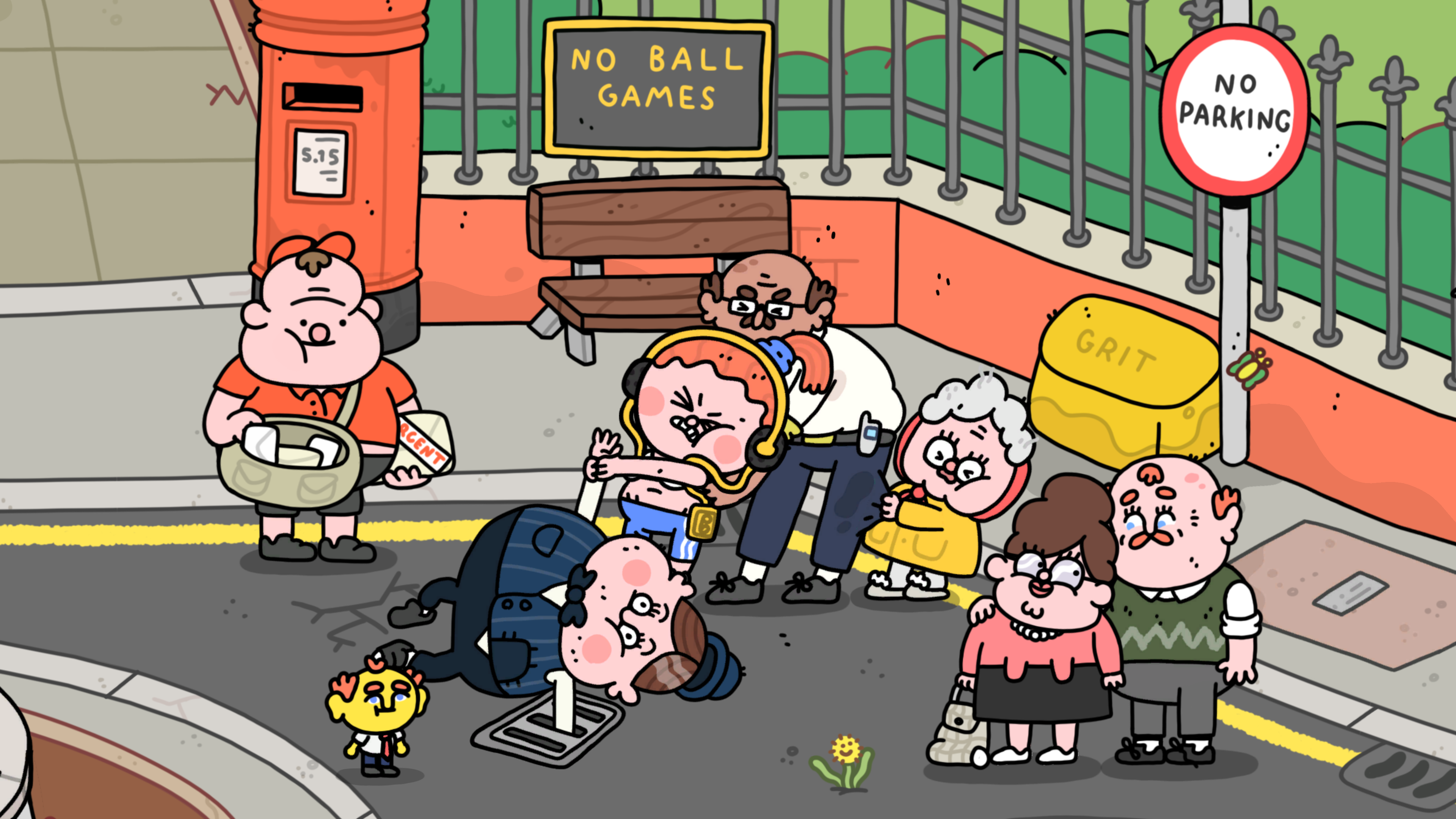
Thank Goodness You’re Here takes roughly two hours to play through, and sees you explore the fictional Northern British town of Barnsworth, as a little cartoon fella ostensibly visiting to sell something to the town, but ultimately roped into helping out with increasingly elaborate odd jobs for the locals until the mayor finishes up a meeting.
To give specifics of the game’s humour would spoil some of its charm. It’s very much built on the kind of 80’s British humour that relies on a visibly obvious punchline being set up, and tension growing as you know exactly what’s coming, before a last minute subversion pays off that expectation and tension in a slightly different way than the setup implied.
Also, for those of you from the UK, there’s a lot of very specific regional humour that doesn’t feel the need to explain itself to an outside audience, in a way that I found really charming.
Best Giant Bottomless Pit to Throw my Free Time into: Balatro
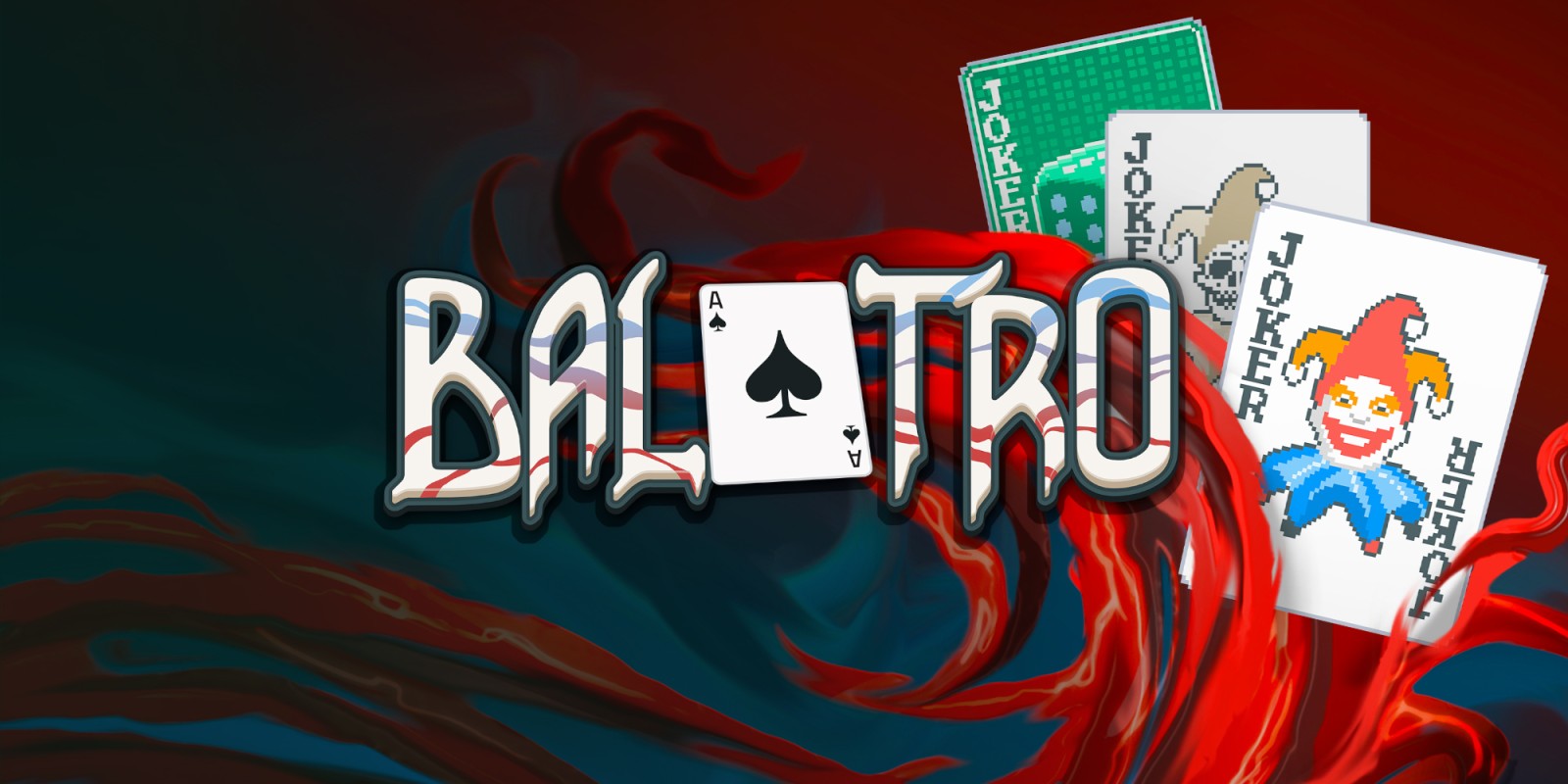
God, Balatro is dangerously addictive. I lost so much of my life to this game in the first few months after it was released.
Balatro is, on the surface, a poker simulator?
Make specific poker hands, score points and multipliers depending on hand rarity, and try and score high enough value hands to progress.
However, the twist comes in how you are able to modify both the content of your 52 card starting deck, and the rules by which hands are scored in increasingly elaborate ways.
Perhaps you unlock a starting deck where there are only two suits, hearts and clubs, doubled up in number to get back to a 52 card deck. This makes aiming for flushes considerably more consistent.
Perhaps you then start focusing on converting the value of cards in your deck into tens so you can start playing the normally illegal five of a kind hand.
Then, perhaps you add a walkie talkie joker, which offers you a score multiplier every time you play a ten or a four (ten four, over), increasing the value of your five of a kind made out of 10 of hearts cards even further.
The more you play, the more elaborate things become.
To say Balatro is a poker simulator may be true in the most basic of senses, but it’s more a randomised deck building roguelike game about discovering synergies, and working out how best to score points while digging for that one card you know’s going to burst your strategy wide open.
God it’s really hard to put down once you pick it up. It’s a game that knows exactly what it wants to be, and focuses on that vision with laser precision.
Accessibility Innovation that Made me Cry: Prince of Persia: The Lost Crown

Those of you who follow my work regularly will likely know, I don’t tend to cover Ubisoft’s games as a general rule of thumb.
My issue is not with the average Ubisoft employee, but more with the fact that Ubisoft management a few years back were revealed to have been complicit in huge amounts of employee mistreatment, which by all accounts didn’t really improve in the years following the news coming to light.
As such, as a rule of thumb, I try to avoid covering most Ubisoft titles generally.
That said, there are always exceptions, and in 2024 there was one Ubisoft game I felt it was necessary to play through for work – Prince of Persia: The Lost Crown.
Prince of Persia: The Lost Crown is a side-scrolling Metroidvania that first made its way onto my radar back in 2023, when Ubisoft detailed the game’s accessibility features seven months ahead of release, as part of Summer Games Fest.
This was one of the only times a AAA game announced any accessibility specifics at the time of reveal during that year’s summer game reveal livestreams, and to do so months ahead of release was notable in and of itself.
The Lost Crown features a bunch of really cool accessibility features, including Ubisoft’s first implementation of high contrast mode visuals, and a bunch of combat difficulty tweaking modifiers such as increased parry timing windows, but the feature that made me cry with joy to see implemented was the option to pin screenshots directly onto your in game map.
I have Aphantasia, a condition that means I lack a visual imagination or memory. Pair this with my ADHD which further causes issues with memory, and Metroidvania games are often a real struggle for me to play, due to my difficulty remembering where to backtrack to as I progress and unlock new traversal skills.
While some games such as Metroid Dread have in the past accommodated my disabilities with robust map systems for automating map labelling and offering robust pin options, nothing quite compares to letting me actually look at a literal screenshot of what was going on in a room that I found earlier in the game, to remind myself visually exactly why I might want to backtrack to there.
This feature was incredibly personally impactful, and by itself makes Prince of Persia: The Lost Crown a game I want to ensure gets one of my end of the year awards.
Game I Was Most Surprised by Enjoying: Pacific Drive

As a rule of thumb, I don’t enjoy survival crafting games. Any game whose core loop is about collecting materials, crafting and repairing your equipment, to travel slightly further, to get new materials, upgrade, repair, and travel a little more just really isn’t my vibe.
Pacific Drive is the exception to that rule.
In Pacific Drive, you play a person trapped in a mysterious supernatural equivalent of a nuclear exclusion zone, where reality seemingly unwraps itself the longer you explore.
Players need to collect resources quickly, before either driving further into the wild or finding a portal to teleport back to their home base, while upgrading their vehicle for lengthier journeys into more treacherous zones, all while trying to unravel the game’s wider mysteries.
I think the thing that makes Pacific Drive work for me, when the genre isn’t usually appealing, is in large part the connection I developed with the beat up car that served as my only constant, safe haven, and ultimately companion throughout the game’s isolated, cruel, unforgiving world.
Sure there were voices talking to me on the radio, it wasn’t clear exactly how much I could trust any of them in the long run though.
My car was the only thing I knew I could trust, and I came to feel a weirdly strong emotional connection to it.
By focusing the game’s upgrade loop on the car rather than my human player, it felt like I was investing in keeping the car safe, so it could keep me safe in return, in a form of symbiosis.
I’ve never been the kind of person to personify a vehicle that I’ve owned, but Pacific Drive made me understand those kinds of people.
As I began to paint my car, and decorate it with flags and custom doodads, I began to see damage to the car as a personal failing.
I found myself trying to prevent damage, even if it was repairable, because I owed that to my car.
That feeling of connection to the car changed my relationship to the game’s mechanical genre, and made me get invested in the kind of game I would never normally have found myself sinking so much time into playing.
Best Horror Game at Capturing my Medical Isolation Fears: Mouthwashing
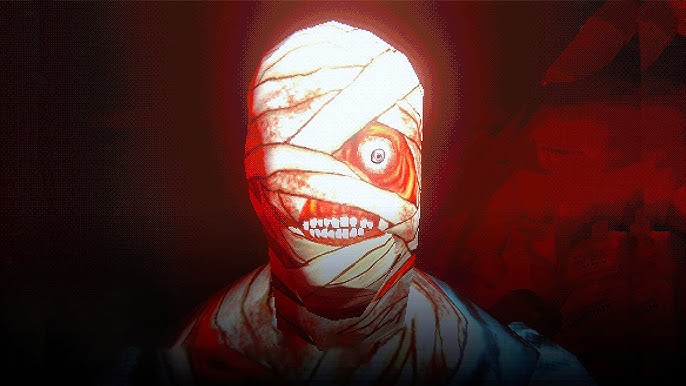
Mouthwashing is easily the most personally affecting horror narrative I’ve experienced in years.
It’s a masterpiece. Go play it if you have any interest in creative horror storytelling.
If you need more convincing, I guess I’ll do my best to give you a spoiler light explainer of what I think it does so well.
Mouthwashing is, at its core, a game about the horrors of being trapped. This is kind of obvious if you explain the basic big picture premise, it’s a story about the crew of a haulage freighter ship in deep space who become estranged together, hoping for rescue.
They’re trapped alone with each other in an enclosed space. The horror of being trapped.
The thing about Mouthwashing is that, over the course of its two hour runtime, it explores the fear of being trapped from a number of different angles, each of which is going to invoke horror in different kinds of people in differing ways.
Not everyone is going to find the same parts of Mouthwashing scary for the same reasons, but if any part of it resonates with you, it will ultimately be because of one of its many, varied, explorations of the horror that comes from being trapped.
For me, what worked about the game was its explorations of being trapped and powerless in a medical context. Without getting into the game’s specifics too deeply, one of the plotlines involves a member of the ship’s crew who has been badly injured, and is at the mercy of the remaining crew members.
They’re responsible for handling everything from his ability to eat through to his access to pain medication, largely powerless to control the situation.
This storyline reminded me of a lot of moments in my own life, for different reasons.
It reminded me of being in hospital after surgery a few years ago, having sleep paralysis and hallucinations as a rare side effect of doctor prescribed sleeping medication. I was trapped, conscious, unable to move, in unbearable pain, watching chillingly tangible horrors unfold in the room around me, as I could do nothing to flee from them or fight.
The doctors denied that my medication was responsible, said it was incredibly unlikely I’d had such a rare side effect, and insisted I take them again.
A second night of the same inescapable torture.
It reminded me of being a child, being spoken over in medical settings as though I wasn’t even there.
It reminded me of the horrors of being seen as an inconvenience due to my disabilities as a child, being told to my face that the suffering I was experiencing needed to end not because I deserved respite, but because of the negative impact my suffering was having on others.
Mouthwashing was incredibly impactful for me, in ways that I don’t want to spoil the specifics of. It’s a hugely effective exploration of the horrors of being trapped, that tackled the theme from numerous angles in an impressively short runtime.
It’s fantastic, if heavy, and well worth checking out.
Best Collection of Games I’m Fascinated By, But Perhaps Don’t Always Love: UFO 50
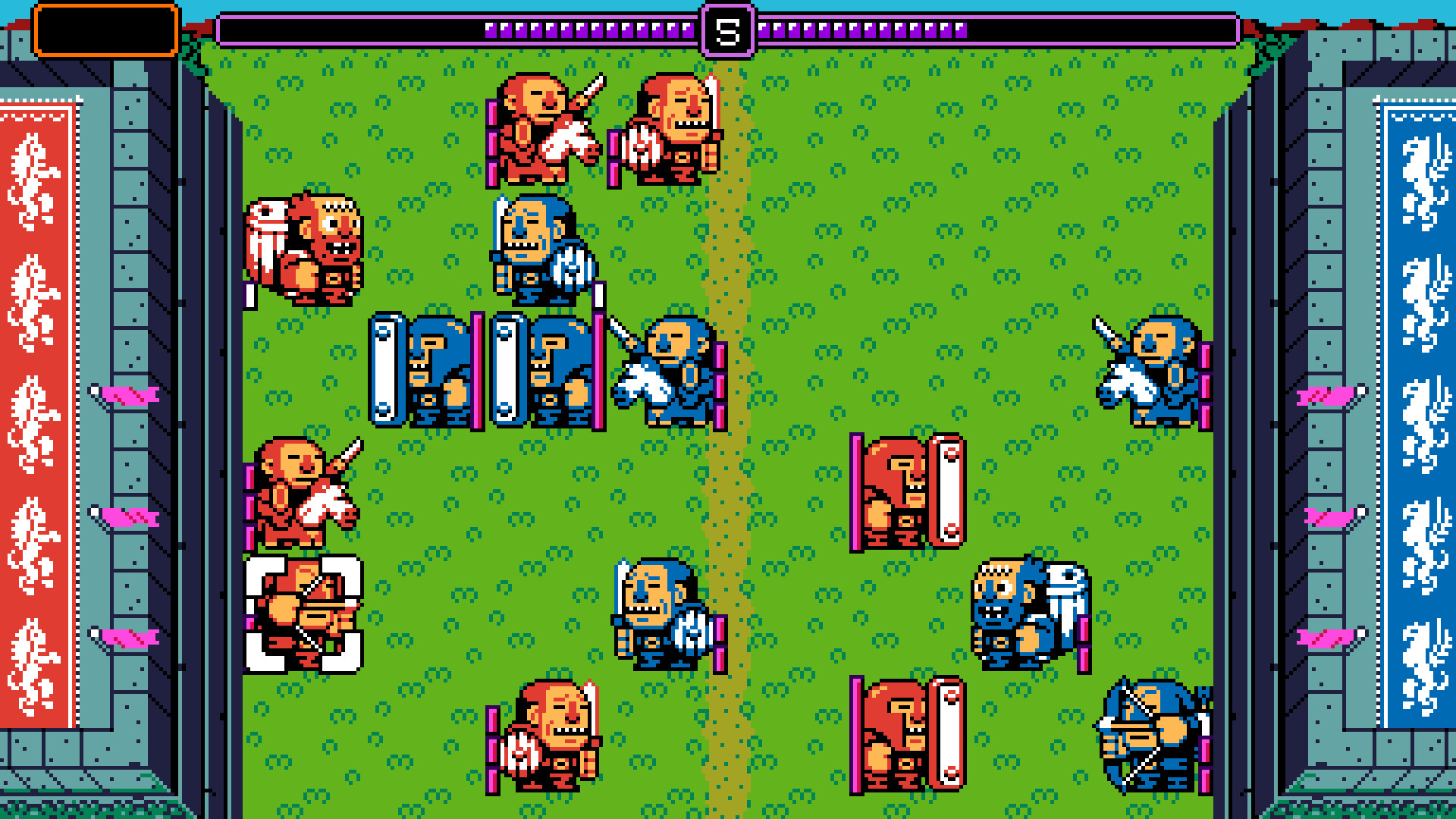
UFO 50 is, at its most basic, an anthology collection of 50 games released for a fictional retro games console.
They’re sorted into chronological order, with some games clearly drawing inspiration from those released prior.
Not every game is great. Early on many of them are confusing, obtuse, and feel barely worth the time to explore.
Having poured many hours into the game, I can say that while there’s a lot of content in UFO 50 that I don’t really enjoy playing, or that is actively frustrating to engage with, the experience overall captures something very authentic about exploring weird old games that you don’t have much context for, and in doing so did manage to spark a weird kind of nostalgic joy in me.
UFO 50, for me, was reminiscent of being a kid in the 90’s and finding one of those bootleg “100 games in 1” Gameboy cartridges at a car boot sale.
Half the games didn’t even boot up, those that did had weird titles and no instructions on how to play them, but it was 100 games on one cartridge, and the search to explore them all and find the hidden gems buried within was like a treasure hunt.
Sometimes, sticking with a game long enough would let the pieces finally fall into place, and suddenly the intent of the designer would crystallise, revealing something really fun hidden behind a previously lightly baffling exterior.
UFO 50 is a game I’ve gone through a lot of feelings about as I’ve played it. There’s honestly a lot of really fascinating game design on show in the anthology, and I can’t deny that having to fight through obfuscation to understand gameplay mechanics IS part of its charm.
Sure, initially I was genuinely frustrated by some of the games in the collection, but the feeling of satisfaction inherent in finally understanding a game’s hidden mechanics and coming to understand what it wants is core to what makes the overall experience so memorable.
I don’t always love UFO 50, but I certainly am fascinated by it the more time I pour into its mysteries.
Game That Made Me Love an Autistic Yeti: The Legend of Zelda: Echoes of Wisdom
If I’m honest, I was a little sceptical of Echoes of Wisdom before the game released. Don’t get me wrong, I’ve spent years asking Nintendo to let Zelda be the playable hero of her own adventure, but I did have some reservations.
Eiji Aonuma has, in the years since Breath of the Wild’s E3 debut in 2016, made some comments about what it would take for the Zelda series to have a playable female lead, and some of those comments made me feel a little uncomfortable.
To paraphrase, his attitude was that there needed to be a “girl gameplay” reason for that kind of game to exist, and seeing the initial gameplay trailer reveal highlight that Zelda wouldn’t be wielding a weapon directly in Echoes of Wisdom did make me get a little concerned that those statements were perhaps reflective of the game we were going to recieve.
And don’t get me wrong, some of that DNA did make it into the final game.
It’s weird that the game’s prophecy talks of a hero, but that hero is referring to Link rather than Zelda, the character you’re adventuring as.
It didn’t stop feeling weird that Zelda had to transform into Link with magic to wield weapons directly.
That stuff did feel a little disappointing in places.
That said, I genuinely do love Echoes of Wisdom as a game, and would really love to see more 2D Zelda games that follow in its formula in the years to come.
The Echo mechanic, for summoning tools to explore the overworld and dungeons, really did capture something I’ve been hoping the Zelda series would nail for many years now, a proper balance of traditional style Zelda dungeon design that isn’t at odds with an open toolbox approach to puzzle solving and exploration.
The main 3D Zelda games could really learn a lot from Echoes of Wisdom in that regard.
Despite my initial scepticism, I do love the combat in Echoes of Wisdom.
Once I got over my frustration that Zelda wasn’t allowed to directly wield a weapon, I found that summoning monsters to fight on Zelda’s behalf felt oddly thematically appropriate for a member of the royal family, perhaps accustomed to having soldiers fight on the front lines for her.
I started to treat it more like Zelda was an MMO summoner class, or a Pokémon trainer sending out captured creatures to battle, and that mental reframing really made the combat system click for me.
And most importantly, there’s a couple of storylines in the game that genuinely moved me.
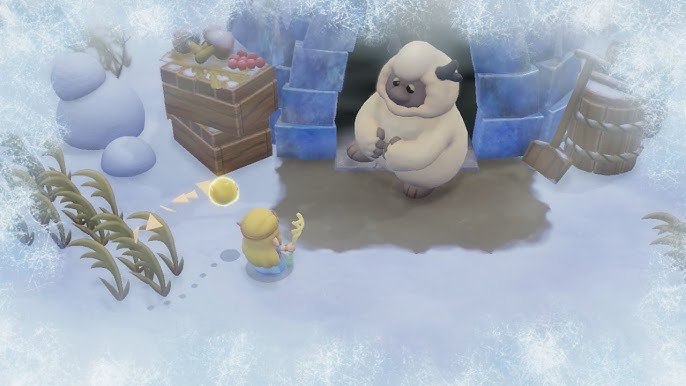
I loved a great deal of the way that the game represented Link as a character who was non speaking as a result of childhood trauma, despite the way that narrative thread ultimately resolved, and the storyline involving Condé, the yeti convinced he’d been abandoned by his family for not being well behaved or productive enough, resonated incredibly deeply with my experiences growing up as a self blaming autistic child with an absent parent.
Condé, it’s not your fault, it never was. I love you, and want to hug you and tell you everything’s going to be okay.
Easiest to Recommend Game of the Year: Astro Bot

If I was going to name a singular Game of the Year based on my head rather than my heart, it would probably be Astro Bot, in that it is the one game on this list that I truly cannot find fault with.
No caveats, it’s just truly magical.
Astro Bot is a 3D mascot platformer that stands toe to toe with the best examples of the genre from Nintendo over the years.
You play a tiny robot trying to explore galaxies, find their missing friends, and reassemble their PS5 shaped spaceship to be able to travel home.
Every level is full of creative ideas, both mechanically and aesthetically, with no concept left to outstay its welcome. Every level is exactly as long as it needs to be to explore its gimmick, then you move on to something else, constantly exploring novel concepts, all excellently executed.
Considering the number of different mechanics on show, the fact that they all feel as good as they do to play through is impressive by itself.
Add onto that the fact that the game makes incredible use of the PS5 controller’s features for immersion, with controller rumble for example emulating the different feels of running over snow as compared to metal, or emulating raindrops falling on the top of the controller, and the overall experience is 20 hours of flawless and engrossing platformer gameplay.
There may be games on this list that had greater emotional impacts on me, or that I connected with in more lasting ways, but there’s no game on this list that’s as overall easy to recommend, to as wide a range of people, without having to list any caveats.
Astro Bot is a masterpiece of a game. Truly, I have no complaints.
My head, logically, says this is game of the year, even if that’s not the answer my heart is going to give my the end of this list.
In a just world it should be Game of the Year, and I’m glad other people are giving it Game of the Year, even if I haven’t landed there myself today.
Humans aren’t rational. It’s fine.
First Game of the Year with my Name in the Credits: Life is Strange: Double Exposure
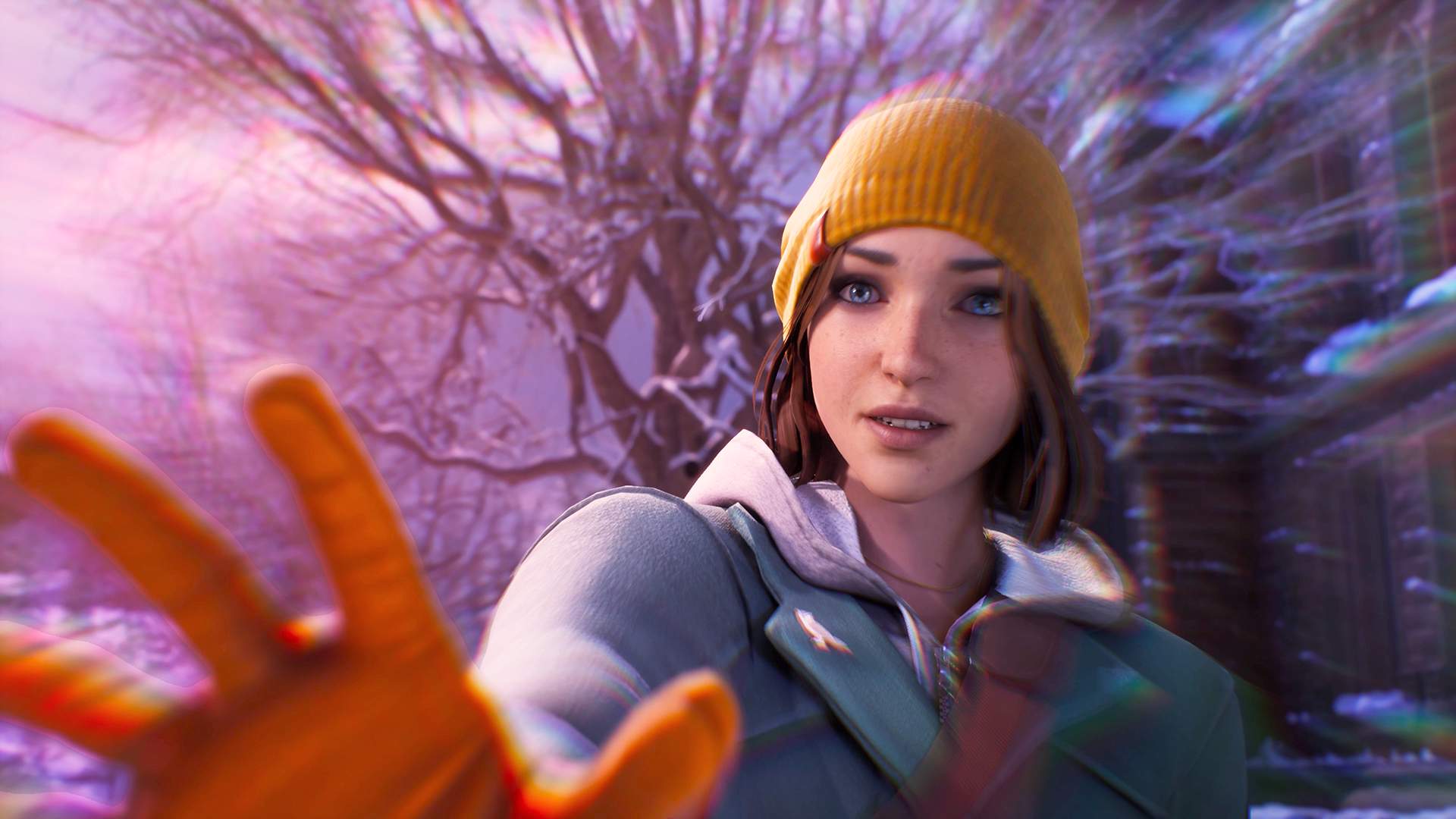
Look, obvious caveat here, I worked on this game as an accessibility consultant, so I can’t be trusted to have an honest opinion.
That said, damn I really enjoyed Life is Strange: Double Exposure. It took some narrative swings, and I can understand they were divisive, but I really like a lot of what this game did.
Let’s start with the obvious – Not everyone is happy that Double Exposure takes place in a timeline where Max and Chloe broke up. I get it, I saved Bae over Arcadia Bay, I saved BAE rather than BAY. I am a big believer in and supporter of flattening an entire town while refusing to let fate force me to give up my lesbian of choice.
However, I do really like the way that the game presents Max and Chloe’s breakup.
We get a story of a relationship that couldn’t survive the fact that Chloe could never be certain Max wasn’t manipulating time, a desire to experience life fully (negatives and all), layered with survivors guilt over being alive at the cost of the deaths of an entire town.
Chloe asked Max not to save her at the end of the original game, and Max chose to save her anyway.
Max showed an unwillingness to listen to Chloe on how her powers should be used, and Chloe feels guilt at the price paid to save her.
That’s a lot of pressure to place on a teenage queer romance.
The breakup had really interesting impacts on the kind of person Max is in Double Exposure, and I think there is a lot to be said about whether Max (and the player) saved Chloe because they wanted to see her survive, or because they wanted specifically to save her so the two of them could date.
I can understand how Chloe would perhaps feel like “If I end this relationship, will Max go back in time and save the town rather than me? Will I die if I leave this relationship? Will this timeline in which I survive go away?”
That’s got to be a lot to reckon with.
Letting Chloe end the relationship, and Max not going back in time to undo that, was a mark of Max truly accepting Chloe’s autonomy in the relationship, regardless of whether they stayed together or not.
I really liked exploring that.
Also, if you want a Life is Strange sequel that follows a version of Max and Chloe who fight the universe to stay together despite the odds, despite the universe continuing to try and tear them apart even after Arcadia Bay, there is a series of comics that explore that in great detail, which I also love.
I’m glad we got a different follow up here rather than just a rehash or adaptation of that version of events.
Both of them can coexist, this is a universe where multiple timelines seems very much canon according to this new game we are in.
That soapbox aside, I think the core mystery at the heart of Double Exposure was really interesting, the third act twist created a really interesting cat and mouse game between primary characters, and I’m fascinated by the potential future of the series presented by the ending.
I want to see where it’s going, I’m cautious, but I am really interested.
Also, more video games should have cool middle aged trans women in biker jackets as characters that I can smoke weed with.
Best AAA Game That I Apparently Solo Developed: Dragon Age: The Veilguard
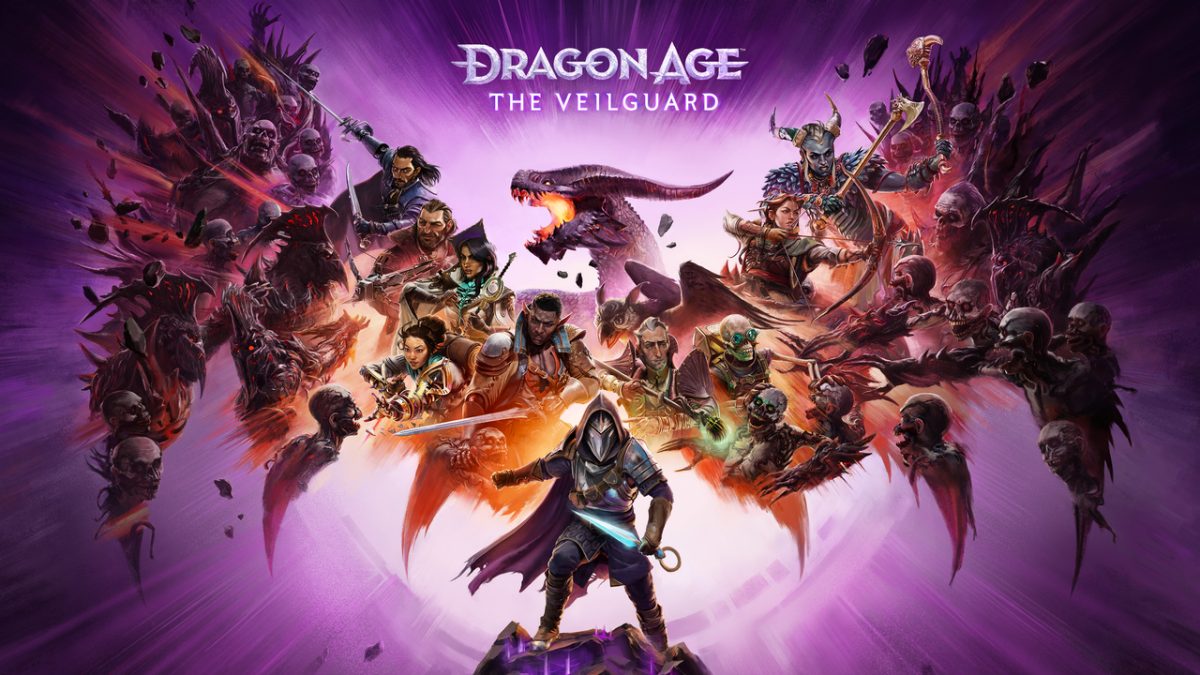
God, there were some weird fucking conspiracy theories on the internet when I first announced I’d worked on Dragon Age: The Veilguard a few days before it released.
Obvious caveat, I am biased, I worked on that game, so ignore my praise, you know the deal.
Four years ago, I was invited to do some work on Dragon Age: The Veilguard. My job role in the credits is listed as “Cultural Consultant”.
That’s, officially, all that has been said about my role on Dragon Age.
That didn’t stop a lot of weirdos on the internet insisting that I was responsible for everything, ranging from casting voice actors, to elements of trailer design, so the plotlines of side characters, ranging all the way to suggestions I was a secret lead writer on the project with final say on major plot elements, that was able to override higher ups at Bioware.
It got to the point that I ended up just joking, and telling people that it was a solo developed indie project. It was a weird week.
However, biases aside as best I can, I want to talk about some of the things I really do love about Dragon Age: The Veilguard.
You know that I’m being sincere, in that I’m currently on my third playthrough of the game in fewer than six weeks.
As a lifelong fan of Bioware’s story focused RPGs, I’ll be honest, my heart has always been more aligned with Mass Effect historically than Dragon Age.
That’s not to say I disliked past Dragon Age games, far from it, I loved Dragon Age Inquisition in particular, but there were a lot of caveats to my praise for that game, and much of the earlier series.
For all my love of the worldbuilding, characters, and overall plot, Dragon Age’s combat never really vibed with me as well as Mass Effect’s more action oriented combat systems.
Dragon Age Inquisition in particular as a game, in my opinion, really struggled with overcomplicating how sidequest content was presented to the player, letting the player loose into wide open world areas too quickly without a proper sense of how much side content was important or not (see players who never leave The Hinterlands), and took too long to establish its core plot (Not introducing the villain or allowing companions to open up to the player until Skyhold is reached).
For me, Dragon Age: The Veilguard fixed basically all of the issues that had, for me, made Dragon Age games titles that I always initially struggled to get into.
The opening sections of the game are a lot more linear and plot heavy to establish the world and its stakes, the new action combat felt immediately more responsive, sidequest content was better parcelled out over time, and companion bonding content began much earlier in the game.
Mass Effect 2 has always been my favourite Bioware game, and in no small part that was due to the game’s final act, in which you’re sent on “Loyalty Missions” to bond with your crew before the “suicide mission” you’re prepped to expect many of your characters may not survive.
Those were the game’s most memorable missions, the times you truly connected with your companions, and I always wished they would see a return.
Dragon Age: The Veilguard essentially turns these loyalty missions into lengthy, game long questlines that stretch right from character recruitment through to the moments before the point of no return.
This increased focus on getting to know your companions, seeing them get to be the main character of their own little episodic adventures, for me really strengthened my connection with the party in ways that I found delightful.
Sure, I accept I am biased about this game, but I wouldn’t be on my third playthrough in just six weeks if I wasn’t seriously in love with the experience.
RPG I Think Was Technically Best on Paper of the Year: Final Fantasy 7 Rebirth

Final Fantasy 7 Rebirth is an absolute beast of a video game.
Well over 100 hours long, it lovingly recreates a sizable portion of one of the best JRPGs of all time in impressive open world glory, with an incredibly fluid combined action and turn based combat system, and the devs somehow found the time and budget spare to fill it with a frankly unimaginable numbers of fleshed out and varied minigames.
Seriously, Queen’s Blood by itself could have been a spinoff mobile title, even without the Yu-Gi-Oh style awakening the god cards style subplot, and I’d have happily have played hours more of it.
Why is Rebirth not further up my list if, on paper, it’s such a spectacularly impressive title?
Well, honestly, mostly it’s because it’s part 2 of a remake trilogy, and there’s still uncertainty as to how much part 3 will stick to the original game’s plot or go off in a wildly varied direction, and whether that choice will be good or bad.
Part 3 of this series is going to have a huge impact on my feelings about both entries that came before it.
Put simply, and I know this is maybe not fair, until Part 3 releases I don’t know how Part 2 is going to stand the test of time.
Frankly, I don’t want to give this incredibly polished game my overall Game of the Year award, in no small part because that might look silly in hindsight hindsight when part 3 releases.
Now, is that fair to Rebirth? Maybe not, but I’d rather hold the top spot for something that is new and adventurous, and not a remake of an existing game, whose fate isn’t partially tied into a future entry’s quality.
This game is fantasitc, but it’s built upon the groundwork of something I played a few years ago. It’s waiting to be completed. There’s a lot of things that don’t make me spark with joy to make it my game of the year.
Fair, or otherwise.
RPG I Think Will Stand The Test of Time: Metaphor Re:Fantazio

Metaphor Re:Fantazio is in many ways a pretty rough game to recommend.
Its pacing is at times a bit wonky, its dungeon balancing is a little harsh on MP availability, and certain fights are unnecessarily restrictive in the rules you need to follow to progress.
It’s full of little issues that are, for many, going to be a big turn off to playing.
At times, I found it frustrating. I definately didn’t find it as easy to stick with as some of the other games I played this year.
However, it’s also one of the most impressively written narratives I’ve ever seen in a game, painted with an unbelievably stylish aesthetic I can’t get enough of, and a party of characters exploring a world I genuinely found myself caring to learn all I could about.
The best way I can sell the game is probably like this – Metaphor Re:Fantazio is a JRPG about how stories depicting heroes overcoming evil and ridding worlds of discrimination in the process often not only oversimplify the reality of that kind of task, but can end up pacifying potential revolutionaries, who get catharsis from those stories rather than from attempting to be that change themselves in the real world.
It’s a game in which one moment you’re fighting an egg with human legs and a small family of mice living inside it, literally ripped straight from a Hieronymus Bosch painting, before five minutes later you’re explaining to a child that homelessness isn’t a moral failing, and that she’s not going to end up homeless as punishment if she doesn’t do enough chores for her new adoptive mother.
It’s a game about exploring a world full of fictional species based bigotry and discrimination, where you’re tasked with learning about the land’s people and their needs.
It’s not just about learning enough to understand their oppression, but learning about their wider culture, their beliefs, their joys, their values, and how best to help and support them if a more peaceful world is some day made possible.
It’s a game that challenges you to wrestle with the reality that attempted assassinations of fascist, militaristic, populist political figures, whether successful or not, will regardless have far reaching unpredictable consequences.
Succeed or fail, your action will result in things you cannot predict.
It even has a sidequest about a person in incredible amounts of pain, not getting proper support with pain management, and deciding to murder those responsible for his current existence as someone suffering with chronic pain, prompting the party members to have to debate the ethics of such an act.
I wonder why that plotline felt particularly current and topical?
Metaphor Re:Fantazio may have a handful of gameplay issues, but it’s undoubtedly the 2024 video game that I will be thinking about most deeply in the months to come.
It’s impressively politically aware, and not afraid to shy away from interesting and complex situations.
Overall Game of the Year?: Like a Dragon: Infinite Wealth
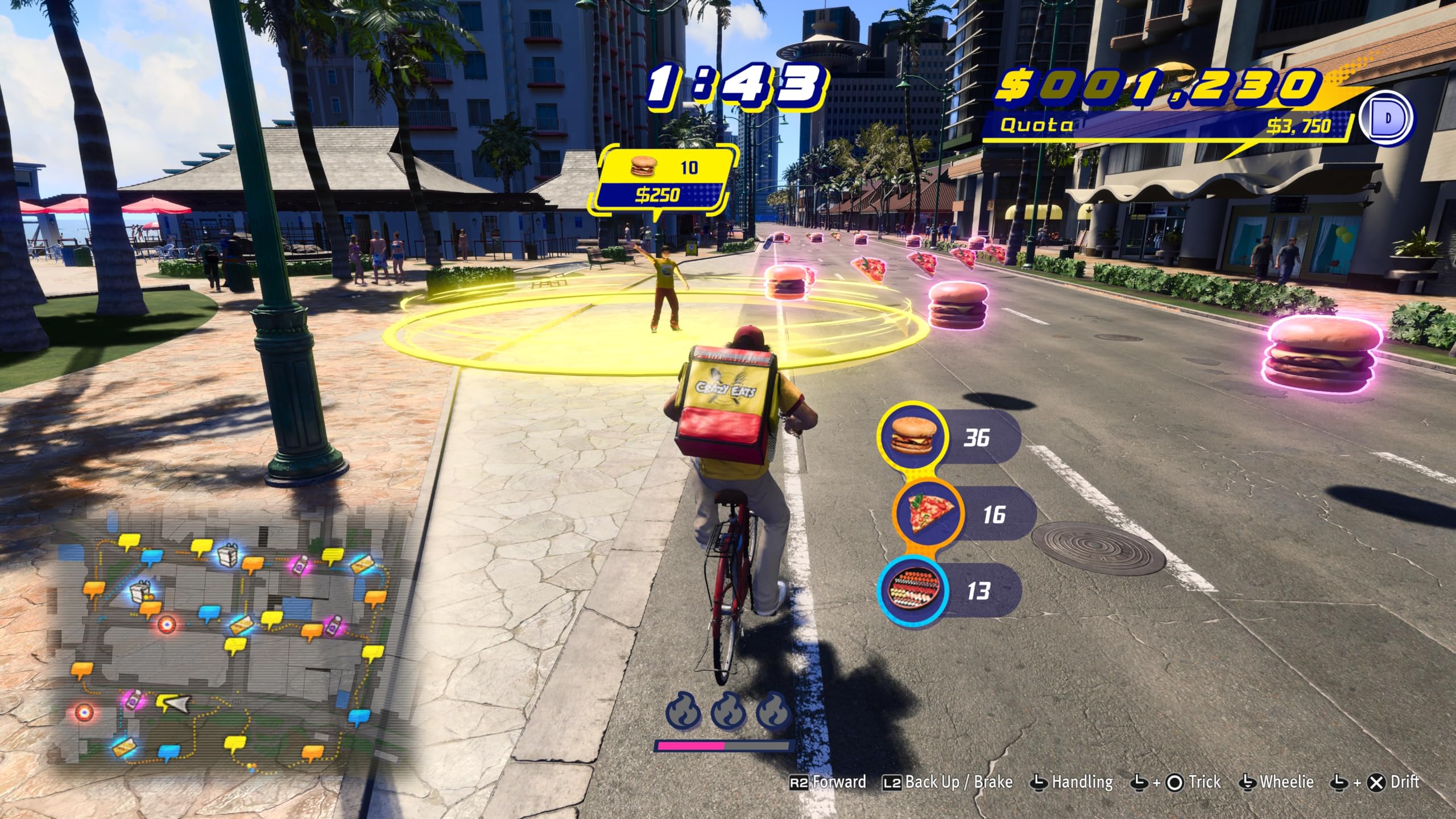
Look, competition for overall Game of the Year this year was tight. There were like three different very high quality RPGs that aren’t the one that I worked on, and all of them were really impressive in very different ways.
I’m an RPG gamer through and through, and I almost awarded a 3D platformer my personal game of the year.
There’s multiple games on this list that, if you asked me on a different day to write this script, might have instead taken this top spot.
But when push comes to shove, I’m giving my main Game of the Year award to Like a Dragon: Infinite Wealth, the only video game this year that inspired me to write a parody of the Pokérap about 150 buff man archetypes, and then convince my friend Jonathan to record performing the lyrics during his lunch breaks for a week.
That kind of dedication to a video game after completing it deserves some praise.
The Like a Dragon series, previously known as the Yakuza games, are made up of a number of adventures that are equal parts serious crime drama and silly nonsensical minigame side quest buffoonery.
Infinite Wealth, the second turn based RPG in a series largely known for real time brawler combat, has a story that focuses on Ichiban Kasuga, an infectiously positive former Yakuza member who has made it his life’s mission to help former Yakuza members find jobs and reintegrate into society after the dissolution of a number of the largest Yakuza families in Japan at the end of the prior game.
This new quiet life is thrown into disarray, sending Ichiban instead on a journey to Hawaii to find his long lost and assumed dead mother, who may be on the run from several criminal factions for mysterious reasons.
And yeah, the game is kind of that, but it’s also a second completely separate and tonally distinct story.
Half of the game is instead following former series protagonist Kiryu, a former Yakuza member who had to fake his death, coming to terms with a recent cancer diagnosis, completing his bucket list, while his friends try to convince him that he has had a positive impact on the world around him and should fight to keep living rather than fade into the background and quietly pass away.
It’s also a story about political corruption, and Hawaii being poorly respected and treated by major international powers.
It’s also a game in which there’s a Pokémon knockoff called Sujimon, where you collect muscular men, level them up, evolve them to fight in gyms, and eventually take on the Sujimon League.
It’s a game that made me cry with genuine joy, at a sidequest that concluded with a trio of big burly adult babies scattering incontinence pad filling from a rooftop to emulate snow at the expense of their infancy based holiday plans.
Seriously, it was beautiful in ways I was not ready for. I was not ready to feel that deeply emotionally impacted in that moment.
It’s not a perfect game. My biggest issue with it is that some of its content surrounding representation of disability I was a little disappointed by.
That said, overall, the game was a well paced, creative, constantly surprising roller coaster of a game that was so much more expansive and densely designed than I could have prepared myself for.
It’s full of characters I would happily see take the lead role in sequels, and truly this game obsessed me for months.
It’s not perfect, but its heart is in the right place, just like protagonist Ichiban.
There we go. Took me almost an hour to record the script for this. No idea how long it’s going to be post edit. There you go. Game of the Year.
I’m off for my holidays now. No more work from me this year.
Goodbye.
Categories: Disability, Gaming, Video
 LauraKBuzz.com
Recent Comments