[This review was written in late 2025, but I have ADHD and completely forgot to post it. Enjoy this delayed review now, before I head off for Campaign 3 in the coming weeks]
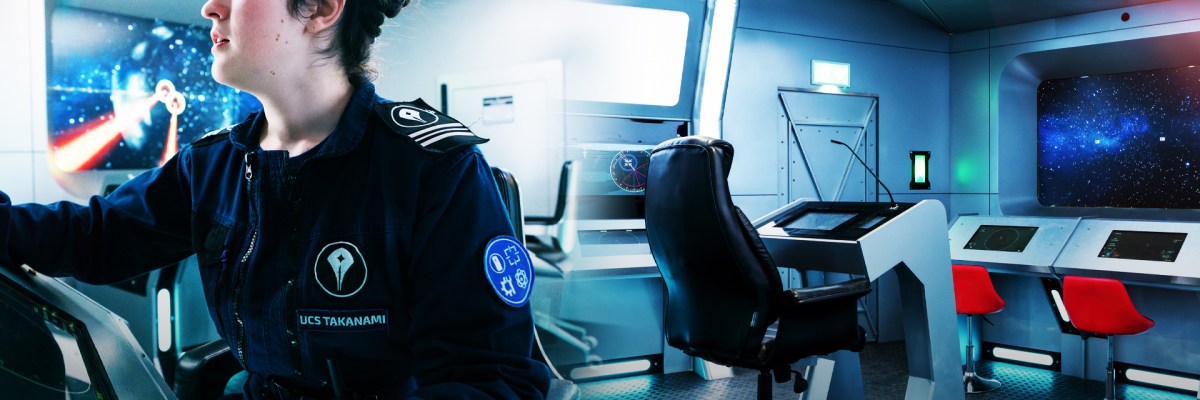
Last Summer when I first visited Bridge Command, London’s Star Trek inspired video game / live theatre / LARP inspired experience for a one off mission, the first choice I had to make was what kind of spacefaring adventure I wanted to be a part of – Exploration, Intrigue, Diplomacy, or Military.
When I discuss Bridge Command being inspired by Star Trek, I realise that could mean a million different things depending on who I’m talking to and what they value in their science fiction storytelling. For some it’s all about the episodes where you struggle not to be blown out the sky by overwhelming forces. For some it’s about quiet moments seeing some phenomena someone’s never seen before. For some it’s about the mystery, the factions trying to outplay each other. For others it’s about the tense discussions and negotiations.
Bridge Command clearly recognises that in its structure for stand alone mission design, but I find their approach to special events and campaign structures comparatively interesting in how they use longer runtimes and episodic structures to blur these lines a little more.

I previously reviewed Bridge Command’s first campaign, The Conspiracy, which I took part in over a single condensed weekend in August. You can read my more in depth thoughts on that first campaign there, but in short it was an action thriller that most closely aligned with the “intrigue” style of missions Bridge Command offers, and worked well as a condensed experience due to its naturally frantically moving narrative pace. It was well worth taking part in as someone already a fan of Bridge Command, and made use of interesting set piece design that clearly would not have been possible to execute in one off missions offered to standard first time players. It was definitely worth paying a little extra to experience as someone who would regardless have spent the money to play five regular missions, and felt like a great starting point as a player looking to get more involved in Bridge Command’s broader narrative.
While there were definitely moments and missions in The Conspiracy that blurred the genre lines, it was fundamentally in my experience a story designed for Intrigue mission centric players.
By comparison, Campaign 2 (Connections) is well and truly designed with Diplomacy players in mind. It’s not going to be for everyone, I’ve known groups of “shoot first and ask questions later” players who probably would complain about the degree of conversational focus, but as a diplomacy centric player it exceeded my expectations.

To give you a sense of my personal investment in diplomacy as an approach to solving problems in space, I was recently scouted for a position on a Diplomacy specific subteam within the Bridge Command universe. For a player like me, the sort of player looking for active opportunities to do diplomacy homework in between deployments, Connections could not have been more geared to my tastes if it tried.
I obviously want to be careful not to not to share spoilers for the content included in Bridge Command’s second campaign. I think in many ways avoiding doing so is more important for Connections than it was for The Conspiracy. This will inherently make discussing specifics about my feelings on this campaign content tricky, but I will do my best.
Much of where The Conspiracy shines as a narrative is in its setpiece encounters – missions that are dramatically mechanically altered from standard Bridge Command play, full of high tension spectacle, and feature pressure applied from moment one when arriving onboard your ship. By comparison Connections’ most “big budget” missions have more of a focus on bringing multiple actors into play, in some cases characters that players may have scant few opportunities to spend extended time with. Much of the appeal is in getting to spend more time with and build closer bonds with characters who you see regularly around the Warspite or encounter rarely on special occasions, and in the ways you navigate interacting with them as people.
I experienced Bridge Command Campaign 1 over a single weekend, Friday night until Sunday Night – 10 hours of missions complete in under 50 hours. While this worked well for campaign 1, emphasising its strengths by keeping the momentum of the thriller plot moving at a palpable pace, I do not think that Campaign 2’s content is nearly as well suited to trying to binge in a condensed format.
A couple of hours between missions on The Conspiracy was plenty of time to decompress, ponder mission specifics, and make plans for how to approach future deployments. Connections is structured in a way that feels far more directly built to be, if possible, experienced with more extended breaks between those deployments – be it to theorise diplomatic approaches to upcoming issues, theory craft the implications of plot reveals, or plan how best to take advantage of rare opportunities, this story really benefits from that kind of breathing room.
The story this time around was far less about rushing to solve a problem, and more about making the most of every minute possible (on or off mission) to solve larger than life conundrums. Playing over multiple weeks provided numerous opportunities to engage with UCN cast members between sessions, with those interactions feeling like they had an impressive amount of reactivity for how future episodes were experienced.
While I think it would still be possible to enjoy a condensed version of this story, I am really glad in this case I was able to take things slowly. If a condensed experience is your only option to experience the story as someone travelling into London from further away, I would recommend reaching out to Bridge Command to discuss your options. If they’re happy to do a condensed version I would recommend experiencing it, even if there will inevitably be negatives to that condensed format.

One thing I would recommend to teams interested in playing Campaign 2, I would consider in crew planning how invested players are in roaming plot interactions, and the ability for their given Bridge crew position to potentially get up from their desk when not in combat. There are aspects of Connections’ plot that will be easier to interact with for players that have some flexibility to leave their station unattended for periods of time when not in combat.
While Nav might not be the most mechanically complex station on a UCN vessel, I really enjoyed being the Nav officer for Connections as it allowed me, with my Captain’s go ahead, more room to leave my desk unmanned when times called for it. As much as I enjoy positions such as Engineering, I feel like having to keep a close eye on energy and heat levels in ship systems would have hindered my personal experience as a player. This maths is going to differ from person to person, but in some ways it may help make some of the quieter bridge positions more appealing than they would otherwise be for a campaign crew. Navigation tends to be one of the last spots filled on most Campaign crews in my experience, but for this story in particular there may be some additional incentive that helps encourage people to give the position a try.
Connections also very much feels like a narrative that gives back what you’re willing to put into it. The campaign puts a lot of trust in the hands of players, giving them a lot of responsibility to handle with perhaps less operational oversight than some other Bridge Command content. If you let yourself commit to the reality of the narrative and really get into character, taking the stakes seriously and putting in the work to engage with the narrative, there’s opportunities for some really emotionally impactful relationships to develop, and to learn some really interesting things about the wider world surrounding the current Bridge Command plot. You’ll need a crew aligned in their vision, but there are wonderful opportunities for players willing to make the most of the opportunities it provides.
This all being said, I do think that one of Connections’ biggest strengths also presents its biggest risk – the scale of its plot reveals.
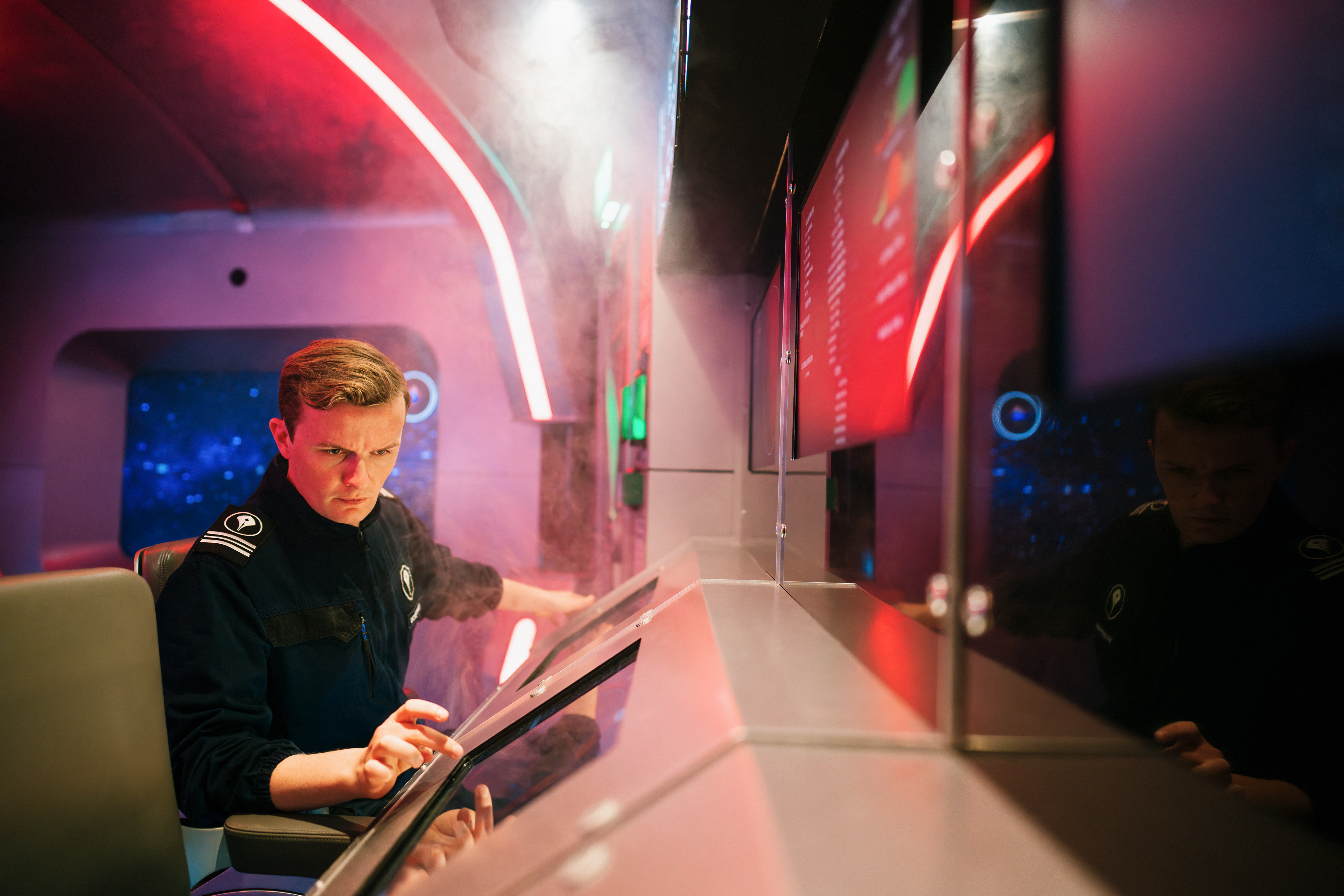
The Conspiracy’s plot reveals, in my opinion, largely involved fleshing out the nature of events unfolding elsewhere in the wider Bridge Command plot. Events you might hear discussed in hushed tones in the Warspite Mess, or mentioned in passing during a special event, could be better understood by campaign players who would jump ahead of the curve a little. The Conspiracy players who experienced that story prior to the special event Operation Daedalus for example may have had unique insight during that special event, but players who had not experienced the Campaign could still pick up hints on those plot threads before they were officially revealed.
Connections’ plot by comparison feels way more like it’s playing in a unique narrative space that, for a while, will be exclusively the domain of Campaign 2 players. While the reveals are incredibly exciting, the sort of thing that makes sense to be disciplined around secrecy with, its impact will be highly dependent on how well players do at not spoiling the reveals for others who have not yet had a chance to try the experience.
I hope that future Connections’ groups respect the in-universe secrecy of the story’s events. I know some players just can’t help but want to drop unsubtle hints to gloat about how they know secret knowledge others lack, but in this case in particular I really hope to see these players keep the secret effectively.
Resist the urge to drop a “Oh, it’s interesting you said X, but I can’t say why that’s interesting” style little smarmy line. Please, let folks experience this story unspoiled. If you make an effort to keep one bit of the Bridge Command narrative unspoiled, make it this.
More so than The Conspiracy, Connections’ narrative direction makes it incredibly hard to talk about without spoilers. I think the best way to do so is ultimately to talk about how I felt as I went through it.
The night I finished the first mission I struggled to sleep. I was buzzing, full of ideas and concerns and possibilities. It’s the most I have ever come home from a mission thankful I had time to process things before going back out on deployment.
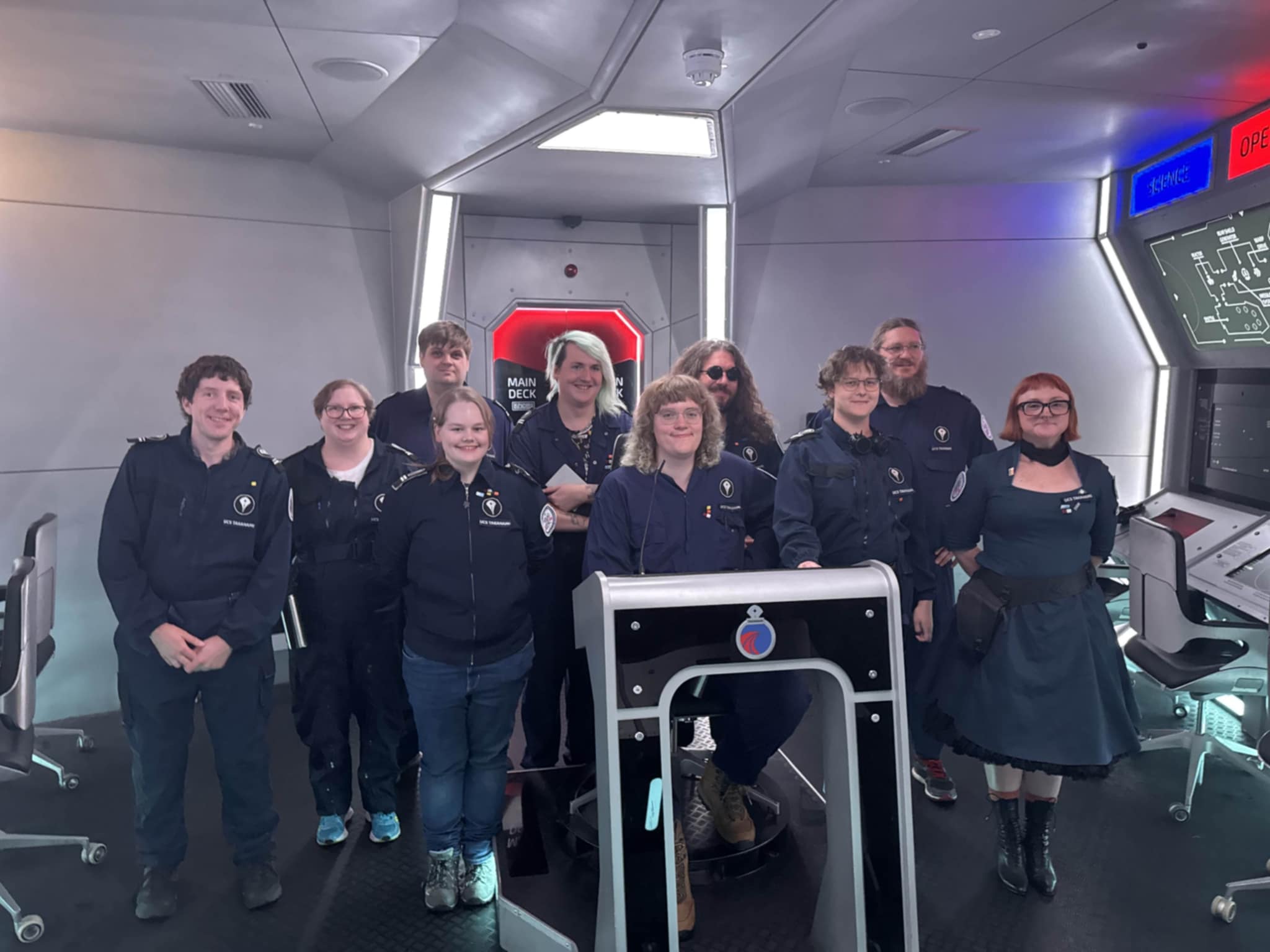
Over the course of the campaign I found myself feeling considerably closer acquainted with multiple members of the Warspite Task Group. While we can’t talk about what we experienced, there’s now multiple characters I get to share a knowing nod with, and who I feel like I have a unique narrative connection with.
I was incredibly impressed how well multiple narrative threads were able to be pulled together by the end, giving us an emotionally impactful ending that felt earned by the work we had put in.
It’s the most I have ever felt like there are genuine stakes and tension to success or failure. The stakes were established well, and kept consistent throughout.
Since completing Connections, I’ve had to wrestle with questions that other players don’t know to be asking, and consider how to act on unique knowledge without revealing that I’ve done so in standard missions. I’ve felt almost a moral obligation to factor the events of Connections into my decision making in other parts of the Bridge Command story.
Connections’ plot was crafted in such a way that, in between sessions, I was able to put real world skills to the test theorising tools that might help in the missions ahead. I ended up inspired to go on real world sidequests that, while not required by Bridge Command, were responsively reacted to by staff. I met some truly wonderful people out in the real world while trying to prepare for the finale, and as a result our story had an ending I truly believe will be unique compared to other groups that follow in our footsteps.
More so than The Conspiracy, which at times felt a little disjointed as it jumped between setpieces, Connections felt incredibly natural in its flow between missions. Everything had one clear driving force that carried sensibly throughout all subsequent deployments.
Connections really gave the Bridge Command actors really great opportunities to stretch their acting muscles. Genuinely some of the best performances I have seen as a player have come from this short series of missions.
This campaign is the first piece of specific Bridge Command content I’d like to find a way to memorialise with a tattoo. I need to find something subtle enough not to be obvious to those not in the know, but I was emotionally invested enough in the plot that I am searching for a way to permanently remind me of that journey.
I know not every Bridge Command player is looking for a diplomacy first adventure, but if you’re the kind of sci-fi fan that enjoys stories that really ask you to take risks and engage with complicated moral and ethical choices, I can’t heap high enough praise on this second campaign.
Categories: Gaming
 LauraKBuzz.com
Recent Comments