Bridge Command Campaign 3 – Into the Barrens is in many ways more difficult to review than either of its precursors because it’s not one static story or set of encounters. By its very design I can only review my own journey through its setting, and even then I have to recognise the role I had in crafting the journey I experienced. Unlike Campaigns one or two, your mileage with Into The Barrens will vary wildly depending on what you’re seeking, what you choose to pursue, and the choices you make.
Bridge Command Campaigns 1 and 2 dropped you as a character into a pre-written Star Trek story. Campaign 3 – Into The Barrens is the closest Bridge Command has so far come to being a truly open canvas, more akin to a Dungeons and Dragons campaign in space, at least before Frontline Missions kick off in a couple of weeks.

A brief recap for anyone reading this review who’s not super deep in the weeds on Bridge Command.
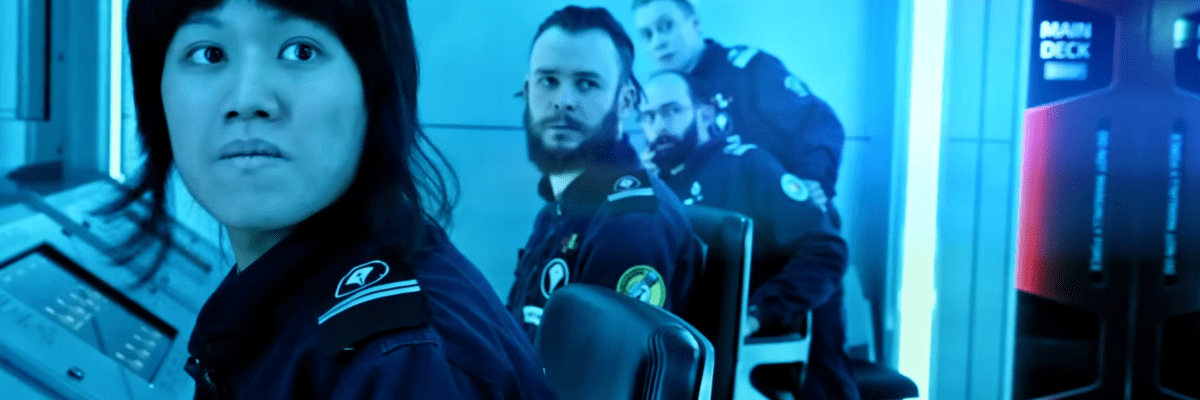
Bridge Command takes place in Vauxhall, London, and exists at the intersection of interactive theatre, Star Trek LARP, and co-operative video games. Single missions consist of up to 14 players collaborating to control a physical starship set, spending 90 minutes flying around space, fighting enemy ships, engaging in diplomacy with trained actors, and solving space mysteries.
A Bridge Command campaign consists of a set of five missions, where the same group of 10 players over a number of weeks take part in a lengthier multi-part story.
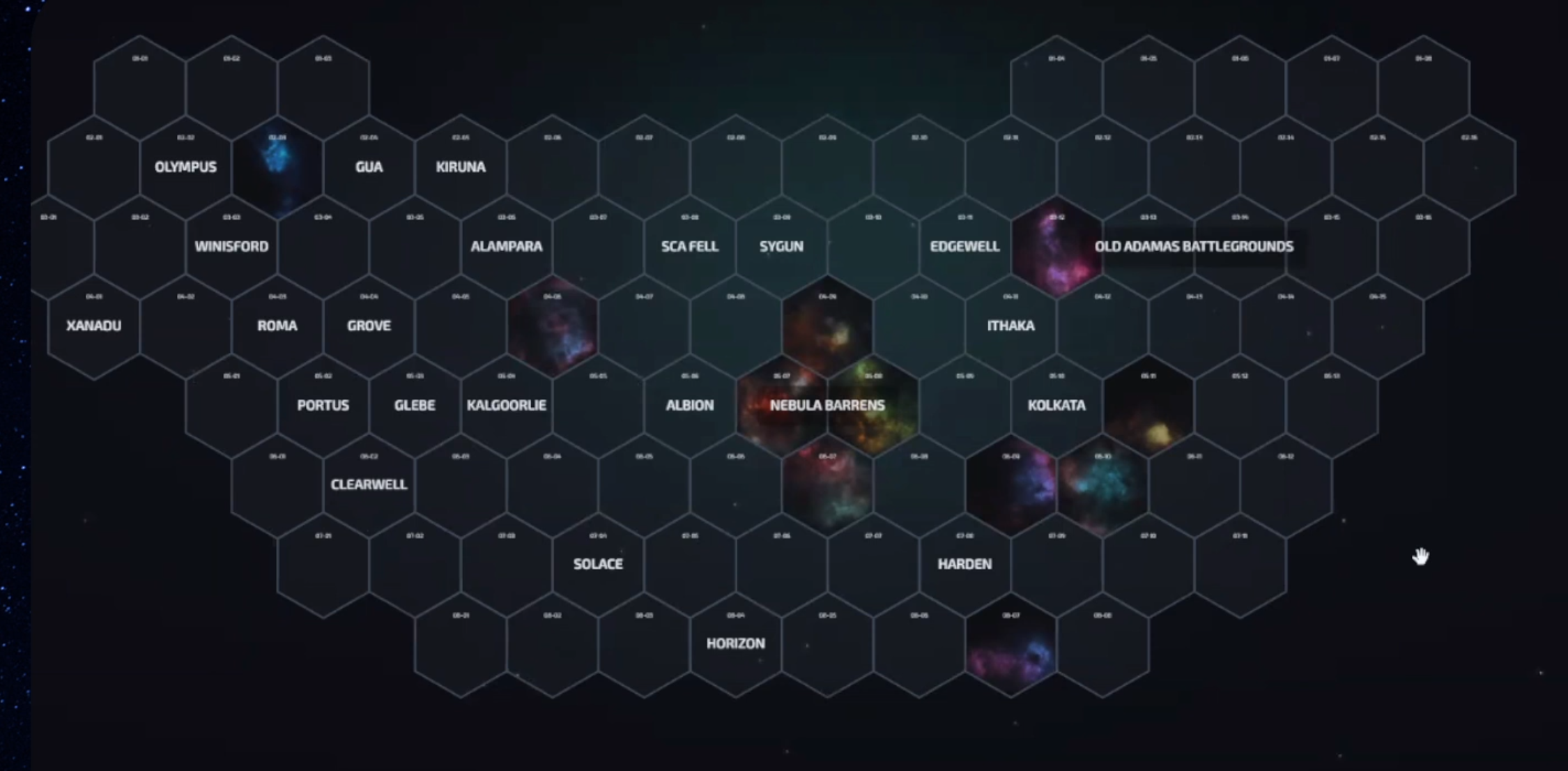
As context for Into The Barrens, last year a lengthy special event mission established the existence of a dangerous region of space, home to a hostile enemy faction. The region of space was put under quarantine, with only specially selected crews being trusted to enter and try to learn more about the heart of the setting’s mysteries.
Where Bridge Command’s first two campaigns were essentially linear stories, with room for player agency but essentially identical setpiece story beats, Into the Barrens is a much more freeform adventure. It’s undoubtedly their most repeatable campaign, but it also lacks a little of the cohesion of the prior offered campaign adventures.
The additional player freedom does offer something truly unique and rewarding, but it also comes at the expense of fragmenting understanding of the wider plot among regulars, siloing the ability for the most invested players to openly discuss with each other the newest revelations about the broad narrative without risking spoilers.
As (I suspect) somewhat of a preview for the soon to debut Frontline Missions format, Into The Barrens does show both the strengths and weaknesses of introducing more open and less rigidly authored content into this kind of ongoing world.

While both Bridge Command’s first two campaigns are pre-designed and somewhat stable stories, Into The Barrens is very much written on the fly, led by the interests of the campaign group taking part.
The campaign uniquely begins with a Session 0, a term that may be familiar to modern Dungeons and Dragons players. This is a roughly hour-long session that takes place a few weeks ahead of the start of the campaign, and is an out of character discussion between the players and Bridge Command staff about the options that are available to explore, and what the story crafted should look like for the group to find it most rewarding.
Our campaign crew, [REDACTED], were brought into the Bridge Command mission briefing room and given a short rundown on the basic underlying concept of the campaign. The Barrens are under quarantine but still contain a number of mysteries and secrets that could be important to future galactic safety. Your crew is being given special dispensation to explore The Barrens, with the hopes of bringing back information, technology, or allied assistance that could help strengthen the upcoming war effort.
We were shown 5 overarching narrative threads, and basically told to pick one or two of them up front that we were most interested in exploring and learning more about. It was made clear that we wouldn’t be locked into any choice we made permanently, but that with the number of episodes in the main campaign we should expect that at most we would have time to satisfyingly explore two of these five possible topics in depth.
Then we were asked to discuss our sci-fi tone interests, mechanical and genre hopes, as well as share the things we were hoping to encounter and avoid in the story ahead. For us, this basically boiled down to exploring historical lore, learning more about one of the more interesting entities seen in the setting, getting to interact with a rarely seen eccentric character, and an opportunity to immerse ourselves in some of the unique culture developing in this dangerous sector of space.
We were here for diplomacy, and were more interested in sci-fi stories about complicated and tense moral choices than ones about blowing up the biggest enemy armada possible.
For those that know about the threat of UVPs, the idea was that our efforts would by the end lead us to helping the UCN be better prepared as the UVP threat continues to loom in scope.
This session 0 was used to write and prepare our first campaign mission, but not to write our entire story in advance. The idea was that, at the end of each mission played, before going home our crew would sit down together and decide which aspects of the previous mission were most interesting, which were less interesting, and what we wanted to aim toward for our next mission deployment. We would then write all of this down on a post-mission report document, and hand it to our campaign organisers.

This is probably a good point in this review to acknowledge the elephant in the room, the “weekend playability” of Campaign 3.
Across Bridge Command’s first two campaigns, I have served on crews with very different approaches to campaign pacing. The Takanami Turtles, my crew for Campaign 1, are largely made up of individuals living outside of the UK. As a result, they tend to complete five mission campaigns over a three day long weekend. The Gobeys, my primary crew for Campaign 2, take a more traditional approach, tackling one mission per week over 1-2 months. Both approaches have their benefits – a weekend sprint has a wonderful sense of dramatic urgency, and a more drawn out campaign gives more time for theory crafting and coming up with unique solutions. I think both approaches have their appeals, but Into the Barrens as a campaign fundamentally will not be the same experience if not played over an extended series of weeks.
As intended, Into the Barrens is written week by week by Bridge Command staff. For us this meant that we could tweak our narrative focus from one mission to the next, getting drawn in by specific characters, or putting certain story beats on the backburner. One of the campaign’s greatest strengths was this reactivity, the idea that if we really locked in and got obsessive about something we encountered in passing, there was no reason that couldn’t become our new primary objective.
There are some drawbacks to this format, the biggest being that mission direction isn’t as often teased in advance to the crew. On Campaign 2 for example it was pretty common to know 2-4 days ahead of flying out roughly what we would be doing on our next mission, allowing room for our more invested crew members to start preparing plans ahead of the official mission briefing. With Into The Barrens this in advance teasing of story beats was absent, presumably because the direction and writing of missions was still underway in the days prior to the mission taking place.
But generally, I do think the flexibility for crews to shift the direction of the story is Into The Barrens biggest strength, and that would by its very nature not be plausible to incorporate into a campaign condensed into just three days.
My suspicion is that a group wanting to wedge Campaign 3 into a weekend would need to have their Session 0 remotely online in advance, select their topics of interest and discuss their tone preferences, then allow Bridge Command staff to go away and craft them a 5 mission story written in advance, less flexibly open to change along the way. It would still be a unique adventure tailored to the players interests, but it would lose some of the freeform direction shifting that for me defined the adventure.
It wouldn’t necessarily be a bad experience, but it would inherently be a different kind of experience.
For a story written week to week, I must commend Bridge Command’s staff for how cohesive a story they were able to deliver our crew. There were obviously fewer opportunities for large set piece moments, but I was impressed by how well our two selected story threads were able to be interwoven, made to feel like they had always been a part of a single unified narrative.
We experienced Into the Barrens a few months ago, and I do wonder how much the timing of our campaign will impact the experience compared to other crews in the future. The campaign as I experienced it was very much about preparing for a threat that has not yet arrived, but I get the strong impression that within a few weeks of this review the campaign will be played under a very different context.
Later this month Bridge Command is introducing Frontline Missions, a new mission type based on claiming and defending regions of space. My out of character assumption is that a large scale war is about to kick off, and inevitably that will change the tone of this adventure. It will likely shift from a story of preventative exploration to one of desperate tension and real time peril, and that shift in tone is fascinating to me. Genuinely, this might be the factor making me most interested in replaying this campaign. I know there’s three out of five narrative threads we didn’t touch the first time around, and I really like the idea of a return journey to The Barrens with that same crew, but under much more tense circumstances.

From a personal perspective, I must admit that Into The Barrens is not my favourite Bridge Command campaign. That’s not a slight on it specifically, just a matter of personal preference.
Campaign 2, Connections, truly nailed what I personally love from a sci-fi story. It was focused on my favourite kind of topic to explore in science fiction, had a really clear focus that was well defined from mission 1, and had me incredibly emotionally invested from start to finish. If I were going to recommend someone try a Bridge Command campaign, Connections is probably the one I would recommend, at least to my sci-fi loving friends. That’s at least in part because I would know very clearly the experience they would have if they took my recommendation. I can vouch for the quality of that pre-crafted story. I know what it means to me, what it made me feel, and I could safely discuss it with them afterward.
Connections is also the Campaign story I think is most important for Bridge Command regulars to experience if they can, in terms of its implications ahead of the war that’s going to imminently unfold.
I had a great time with Into The Barrens, but it did lack the laser targeted focus on my favourite aspect of sci-fi present in Connections. I can’t hold that against Into The Barrens, but I also can’t deny the impact it has on my perspective. Knowing that I could recommend it to friends, but that I wouldn’t be able to safely discuss their experience with them afterwards, is a negative mark against it for me.

I do have some broad concerns about Into The Barrens, mainly around how it inherently fragments playerbase knowledge.
With Campaigns 1 and 2, I would speak to a Bridge Command regular, someone at LT rank with a couple of campaign stars, and ask “which campaigns have you done” to quickly assess the level of world info that was safe to discuss with them. Knowing someone has played Into The Barrens doesn’t give me that same ability to know what I can safely discuss.
This has become a bit of an issue for things like involvement in the Diplomatic Corp, a faction that long term players of Bridge Command may be invited to join where they can discuss diplomatic efforts when not deployed on missions. As a member of that subteam I have to section off any knowledge I learned from Campaign 3. I can’t make any suggestions for future diplomatic plans or tactics based on things I learned during this campaign. I know things with huge implications for furthering diplomatic relations within the galaxy, but the campaign’s format makes that information that I basically can’t discuss with other in universe diplomats.
This is a niche critique, and not likely to be an issue for most Bridge Command players, but at the top end of player investment this campaign’s style of knowledge fracturing does have impacts that I suspect were not anticipated by Bridge Command’s core team.
Additionally, while I enjoyed the overall ramped up danger level and actor intensity during Into The Barrens, I will note that the Bridge Command team were a little inconsistent in their application of Content Warnings. The staff established in one early mission that they would offer content warnings before potentially distressing content was introduced to missions, but on at least one mission failed to issue a content warning before quite a sudden and visibly violent scene. While this was unintentional, it felt like a notable error to make. If you establish that players can rely on content warnings being offered before particularly intense content, the impact of unwarned violent content is made worse for players primed not to expect that content during this session..

Into The Barrens is clearly part of a wider shift within Bridge Command to be able to offer the kind of player who’s experienced basically every piece of pre-authored content Bridge Command something new to do. It’s a campaign that could be explored at least twice if not three times by the same campaign crew before overlapping content, released in the runup to the introduction of Frontline Missions, a new endlessly repeatable mission type.
This idea seems to be that the way to keep the top end of Bridge Command players regularly returning is basically to give individual staff more flexibility to write stories on the fly for players, reducing the feeling that any one player has “completed” the show’s available content in its entirety.
I do really enjoy Into The Barrens. I think its flexibility does make it genuinely worthy of being replayed, and ensures that crews who complete it even a single time get to have a very unique experience.
I have heard rumours of a crew that gave both Red Dwarf AND Battlestar Galactica as tone inspirations for their perfect Into the Barrens adventure. I suspect that even if they chose the same two starting topics as our crew, their experience would by its very nature have felt pretty different.
For me, the pre-authored content found in Campaign 2 (Connections) has had more of a long term emotional impact on me as a player, but I did perhaps learn more major world state impacting secrets during Into The Barrens.
Into The Barrens really gives you back what you put into it. I can’t speak for the quality of anyone else’s experience, but I can say that Bridge Command’s staff truly did feel like they genuinely took all of our feedback on board, and crafted us a story that truly was driven by the things we were interested in following.
I think Into the Barrens is a story you ideally need to come to with a good amount of existing knowledge of Bridge Command lore to get the most out of, it rewards spotting a random name on a ship and knowing why that might be of interest.
If you’re a long term Bridge Command player who’s already experienced Connections and is looking to take part in another Campaign, I would highly recommend giving Into The Barrens a try. It may not clear the lofty peaks of Connections for me, but I still had a very engaging and rewarding time playing.
Categories: Gaming


Recent Comments