The following is an in character “mission report” based on my experiences at Bridge Command, a London interactive theatre experience / video game / LARP.
While the description of events below is as accurate as possible to the events that took place at Bridge Command as a player taking part in a one-off performance, some changes have been made for satisfying narrative flow and to simplify sharing the story with a potentially unfamiliar audience.
I have not shared any information that would be spoilers for a first time Bridge Command attendee. My publicly posted logs will only discuss declassified special events and frontline missions, both mission types that are one-off bespoke missions and not repeated experiences. If you attend Bridge Command, you will not be sent on any missions I describe in public mission logs.
I am not officially affiliated with Bridge Command, and my mission log is not an official “canon” account of Bridge Command lore.
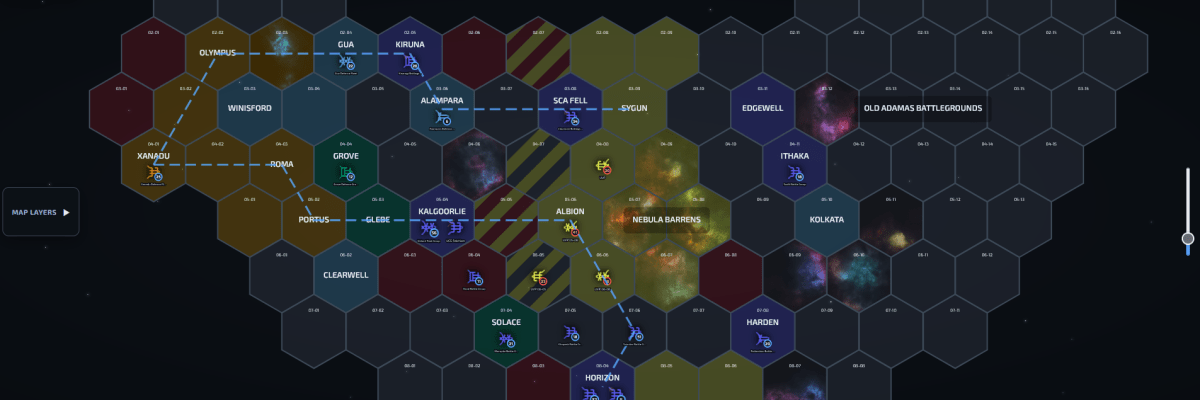
In my first public facing mission log, written regarding Wargames, I described the Warspite mess as featuring a projector, showcasing fleet movements across the Adamas Belt on a tabletop. In the days since then, as it became apparent war was on the horizon, a large monitor was instead set up in the mess allowing off duty officers to watch fleet movements and battle results in real time.
As such, I found myself met by fellow officers as I left the prior mission’s debrief, wanting to ask specifics about how the mission had gone. They’d seen the raw numbers, they had a general sense of the numerical threat we faced and overall outcome, were missing the moment to moment play by play.
It was nice to, for the first time in my UCN service, be able to discuss a mission with fellow officers without fear of classification status forcing me to carefully dance around specifics.
I grabbed a flask of cold water and returned to the briefing room.
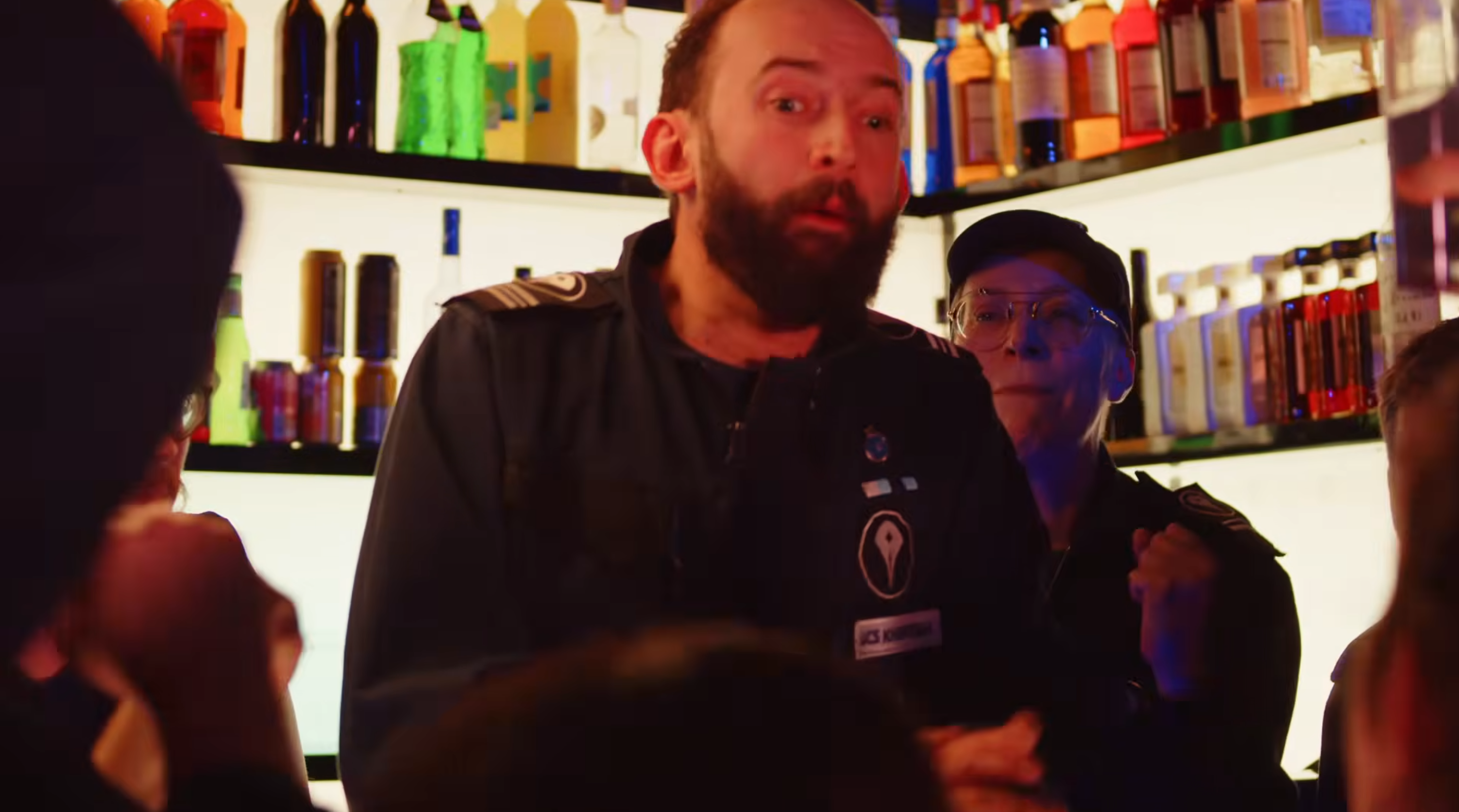
A big part of my signing up for two Frontline missions on the first day of the war was curiosity, how different would two frontline missions ultimately feel from each other? Were these missions going to all be unrelenting UVP contact encounters with a different geographic label, or feel like significantly unique deployments.
Was the era of war going to test multiple aspects of our skills as a crew, or be primarily combat encounters with less downtime than a standard military deployment?
The day’s second deployment would be to zone 06-06, a couple of sectors north of Horizon. The zone is part of the trade route beginning at Horizon with the production and refinement of Gravium, and was prior to the war part of the route Gravium shipments would take to various allied territories.
The sector was also notably UVP controlled. Our previous mission to Horizon had seen us enter a contested zone, one being fought over actively. A fully UVP controlled zone was likely to be more of a combat challenge, and not so easy to bring to allied status.
The sector is important to retake for a few reasons – It would help reestablish the Gravium trade route, but it’s also a necessary zone to retake if we want to reach Albion, another important IMC station currently pretty deep in IMC territory.
We’d received word that a ship filled with IMC casualties, Albion Evacuees, had become stranded in UVP space. We were to enter with the support of medical freighters as IMC casualties were expected. If we could recover any surviving IMC members we were to bring them back to Harden station (just past the recently cleared corridor through southern UVP space) for medical assistance.
Additionally, we were to weaken or eliminate any UVP presence we encountered if at all possible, as a secondary objective.
I was issued the role of XO, first officer, and would be largely responsible for strategic and tactical decisions taken by the Takanmi’s shuttle, crewed by myself and 3 additional officers.
We were the first crew the UCN was sending directly into UVP occupied territory, not contested territory, and as such we were warned to keep our guard up and remain on the defensive. If we needed to fleet the zone, that was an expected possibility that might arise.
We were also primed to expect we may need a medical team to jump into action, depdning on how things went with injured staff from the IMC. As XO I knew I would probably join this subteam, as in a worst case scenario I’m not managing any of the actual desk roles on the shuttle, I can trust my shuttle crew to fly solo where the need arises.
Lastly, flight control had marked on our maps some “red zones”, areas of expected high UVP traffic based on their best probe data and radar estimates. It was advised we go around them if possible, or fast if we needed to go through them.
If any of those metallic squid looking beacons were spotted, they were to be destroyed.
We would be in charge of leading a fleet of medical vessels to join us, but we would be the crew in charge of the overall deployment.
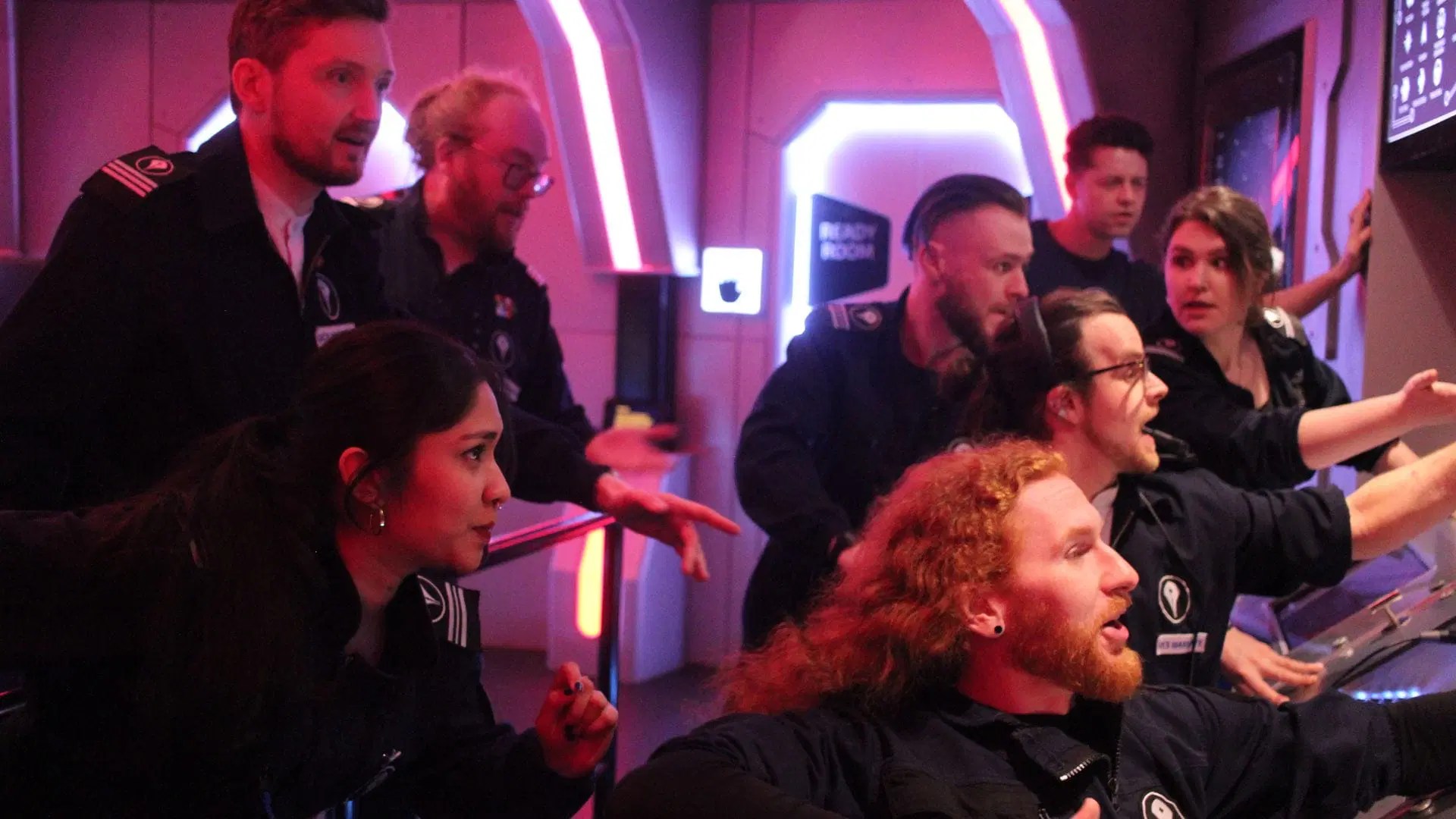
The mission’s captain allowed our shuttle crew a fair degree of autonomy in how we carried out the mission. Keep an eye out for beacons, and handle their destruction so that the main fleet can stay on track. Each time the fleet begins a slow flight around a large red UVP zone, scout inside and see if there’s any UVPs hiding in the nebulas inside. If it’s a small number of UVPs engage them in combat. If it’s a larger number, retreat. Once you know the status of the red zone, report it back to the main ship so they know if the medical fleet can save time and corner cut through that zone rather than travel around it.
Beyond that, trust our judgement on what would best keep the fleet active and moving, and collect any data that the main fleet might be too slow to check out.
Generally, each red zone we entered contained around 2-3 UVP vessels hidden within nebulea in the centre. I didn’t note down the exact ship class, but they were manageable enough for us to tackle by ourselves. We weren’t really saving the main fleet much time, by the time we were done the fleet had generally passed the point where a cut across the zone would be useful, but regardless we were thinning out the UVP heard in the area, and reducing the burden on the main fleet.
On one instance a UVP attempted to flee from our shuttle before we could destroy it. On my orders the shuttle crew chased it at warp 3, managing to stop just far enough in front of it to drop a mine and cleanly destroy it, an impressive maneuver that would not be easy to replicate.
I wasn’t sure if the UVP was heading for a wormhole to warn others we were coming, but I didn’t want to run that risk.
We eventually met back up with the Takanami, just ahead of encountering the Saratoga, the evacuation ship we had been sent to recover. The shuttle crew were sent to lead the fleet just in case there was a trap awaiting us at the vessel, but this turned out not to be the case.
We redocked with the Takanami, and managed to establish comms with the IMC evac vessel. They had a number of individuals in need of transport to a medical facility to treat non threatening wounds, but also one individual who needed immediate triage on the Takanami in our medical bay, to ensure he didn’t die on the way to Harden.
We docked, and a member of the IMC helped to carry a man named David to our medical bay. I told the shuttle helm to take my place as ranking officer on the shuttle, as I would be assisting in the medical care of our visiting guest, to minimise the number of main bridge crew staff needing to abandon their positions.
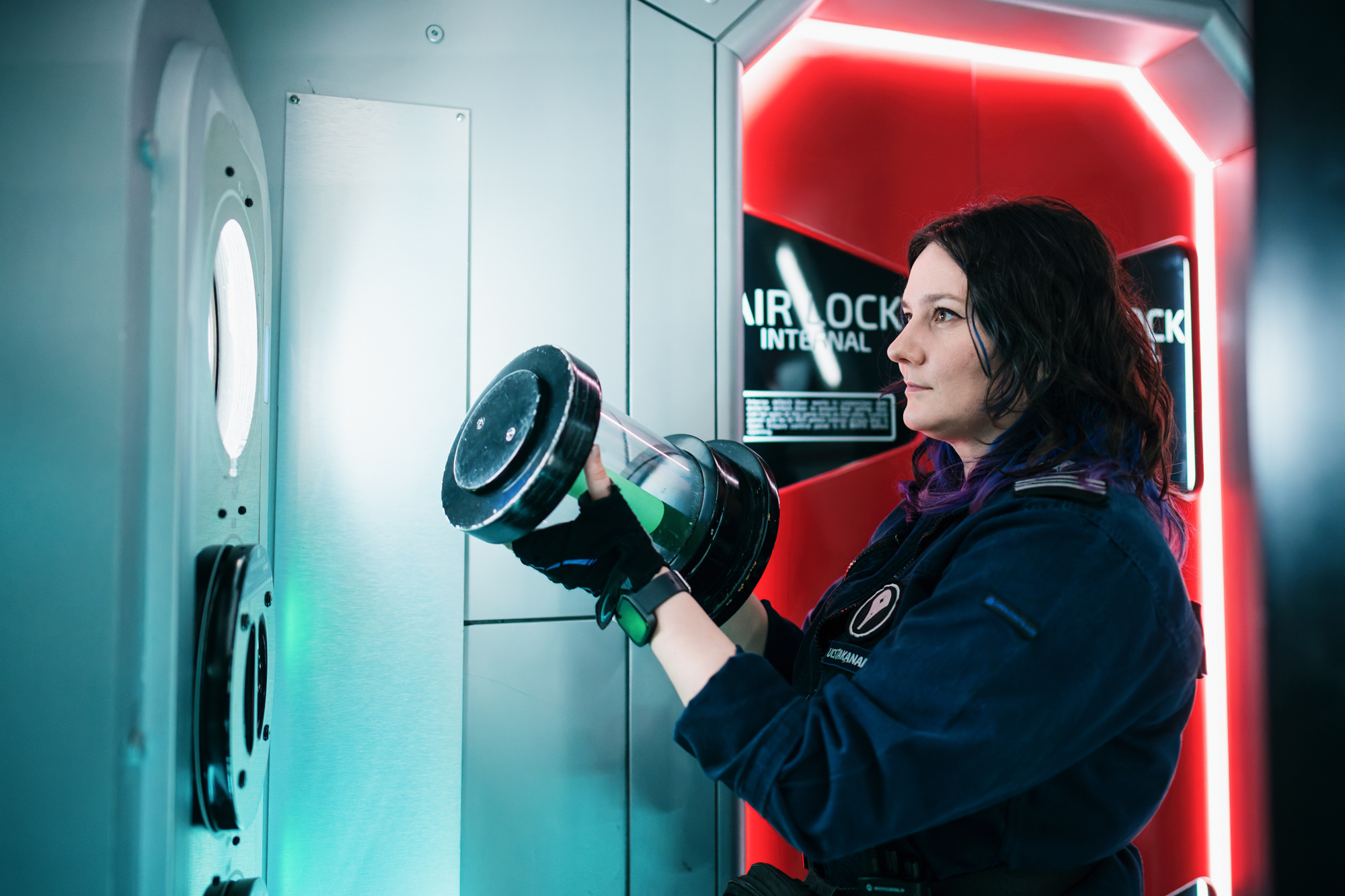
Our IMC contact reported that David had suspected broken ribs. He had not reported any feelings of drawing, or fluid in his lungs, but a slow internal bleed or unexpected puncture could change that if he shifted wrong. Additionally, he had a nasty head wound which would need stemming to avoid increased blood loss.
We didn’t have a medical kit to hand, so the IMC member took off his boot and then sock, and asked an ensign to hold it tightly to the injured man’s head. It wasn’t the most sanitary option for fabric, but I guess it did the job in the moment.
The man was fitted with a portable oxygen mask, with the tank handed to me. We were asked to keep David talking, keep him conscious, given his head injury. Additionally, we were to continue assessing if his breathing condition was deteriorating.
Initially, David’s breath was short and rapid, like hyperventilation. I did my best to encourage him to take slower, deeper breaths.
We spoke of his wife and son, separated from him in the initial UVP attack. He hadn’t spoken to them in days, and didn’t know if they were okay. I told him to keep hope, and shared with him our story of Hamilton, that we too knew the feeling of worrying for someone at this time of war. We would be here to support him, and to fight to find him good news.
We spoke of home, his hobbies, how he found himself mining. I asked him about his greatest find ever in the mines, then nodded along pretending to understand the impact of the 97% purity rock of something he once found. I played up my excitement as best I could.
As his breathing became slower and calmer, I did my best to check in. Was his breathing becoming slower because he was calmer? Was he in more pain, or finding breathing harder? Was there a fluid feeling yet?
We kept him conscious back to base, but the fight wasn’t without casualties. The Talvaar 1 ship was lost in a UVP assault on the retreat, but the majority of IMC evacuees were accounted for and safe.
We were not able to make a noticeable dent in the area’s status as UVP controlled, but we did make an impact on the morale of the IMC. Not only had we freed Horizon from UVP control, but we’d also ventured into UVP space and brought a large number of their people home safely.
David was ultimately fine after treatment in a proper medical facility.
Myself and my fellow officers who helped with David’s treatment were brought to the front of the room during the debrief, with the intention of issuing us Medical Commendation medals. I had in fact already been awarded such a medal, but appreciated the attempted recognition of my work during the deployment.
It was emotionally taxing, but my first day serving on the frontlines of the war was over.
The war was far from complete, but I was proud to be able to point to two different ways I’d tangibly helped push the UCN forward on our first day.
I could see the ways my actions were building, slowly, toward something bigger than myself.
Categories: Gaming


Recent Comments