
London’s premiere Star Trek inspired interactive theatre / LARP / video game experience has just introduced a new mission type. It shows promise, with some caveats.
A brief recap for anyone reading this review who’s not super deep in the weeds on Bridge Command.
Bridge Command takes place in Vauxhall, London, and exists at the intersection of interactive theatre, Star Trek LARP, and co-operative video games. Single missions consist of up to 14 players collaborating to control a physical starship set, spending 90 minutes flying around space, fighting enemy ships, engaging in diplomacy with trained actors, and solving space mysteries.
Traditionally, missions booked would fall into one of a few basic categories – Diplomacy, Intrigue, Exploration, and Military. As of this week there’s now a new type in the mix, Frontline Missions.
Bridge Command’s other mission types operate as stand alone stories. Frontline missions require a little bit of context and backstory to get the most out of experiencing.
Since the summer of 2025, Bridge Command has been slowly teasing a technologically powerful enemy spaceship type called a UVP. These ships have better energy reserves, faster engines, higher ammo reserves, and faster rates of fire than any human crewed vessel. Their pilots seem uninterested in diplomacy, and cause chaos and destruction any time they are seen.
Over several months it was revealed to players that these ships were piloted by an alien species, appearing to be reptilian humanoids. The threat they posed slowly escalated, until mid May 2026 where they finally made their move.
Huge numbers of these alien vessels poured out of a wormhole and began to attack, taking control of large areas of space. For any Star Trek TNG fans, BC basically had its “Picard is assimilated into the Borg” moment, with a high ranking officer kidnapped, implanted with technology, and stripped of free will. They declared themselves “The Herald of Humanity’s Destruction”, and gave the president of earth a limited window of time in which to surrender to their new overlords.
The president of earth refused to surrender, revealing the existence of alien life to Earth’s civilian population, and committing to a war to prevent them ever making their way to earth.
This is the backdrop for Frontline Missions.
Mechanically, here’s the deal with Frontline Missions. There’s a map of space, broken up into hexes. Over the coming months players will fight back and forth, taking and losing control of sectors.
These missions will be written to reflect the current state of the war effort on the map, rather than being a list of pre-defined missions such as those seen with other mission categories. The idea seems that every morning before Bridge Command opens the Frontline Missions for that day will be designed, ensuring that no two missions are the same.
You’re not being sent on one of 7-10 pre-designed missions as with the other static categories – In theory you could experience a much larger number of unique missions over time in this new game mode.
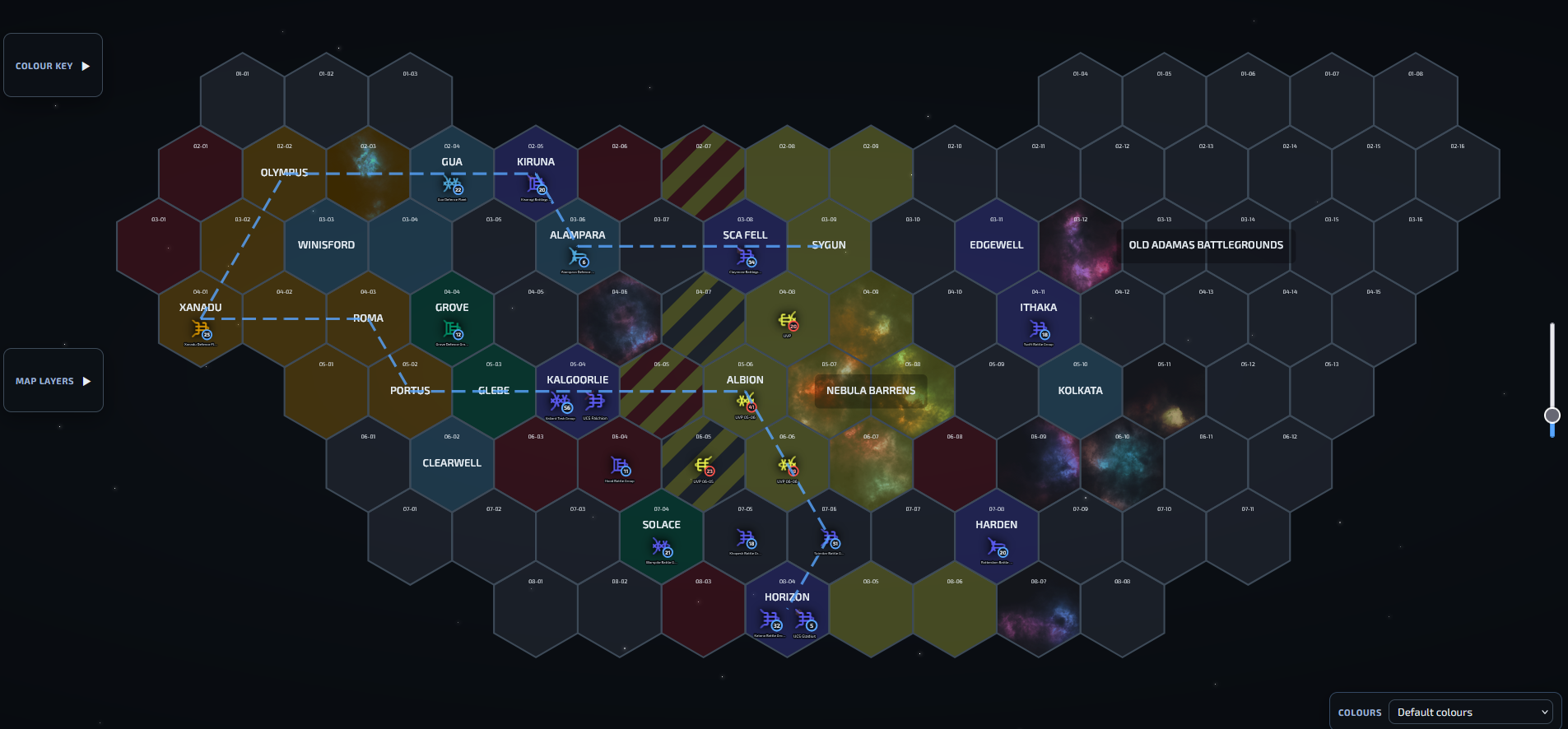
An example for context, on the first day Frontline Missions were offered, most of humanity’s fleet of ships was trapped on the western side of the map by a north to south alien territory blockade. That first day focused on fighting a path through to the other side to be able to reach stations on the East of the map, and retaking control of an important fuel refinery. Anyone who came back to play again the next day would have had entirely different priorities to work toward.
In short, it’s custom missions designed to appeal to long-time players who have played every pre-authored bridge command mission already, and want to guarantee they’ll experience something new and unique when they book a spur of the moment session.
There’s an online version of the war map, with updates on missions (both crewed by players and imagined by staff) shared on Discord. For the foreseeable future, it’ll be possible to watch the war unfold in real time, whether or not you’re serving on these new types of missions.
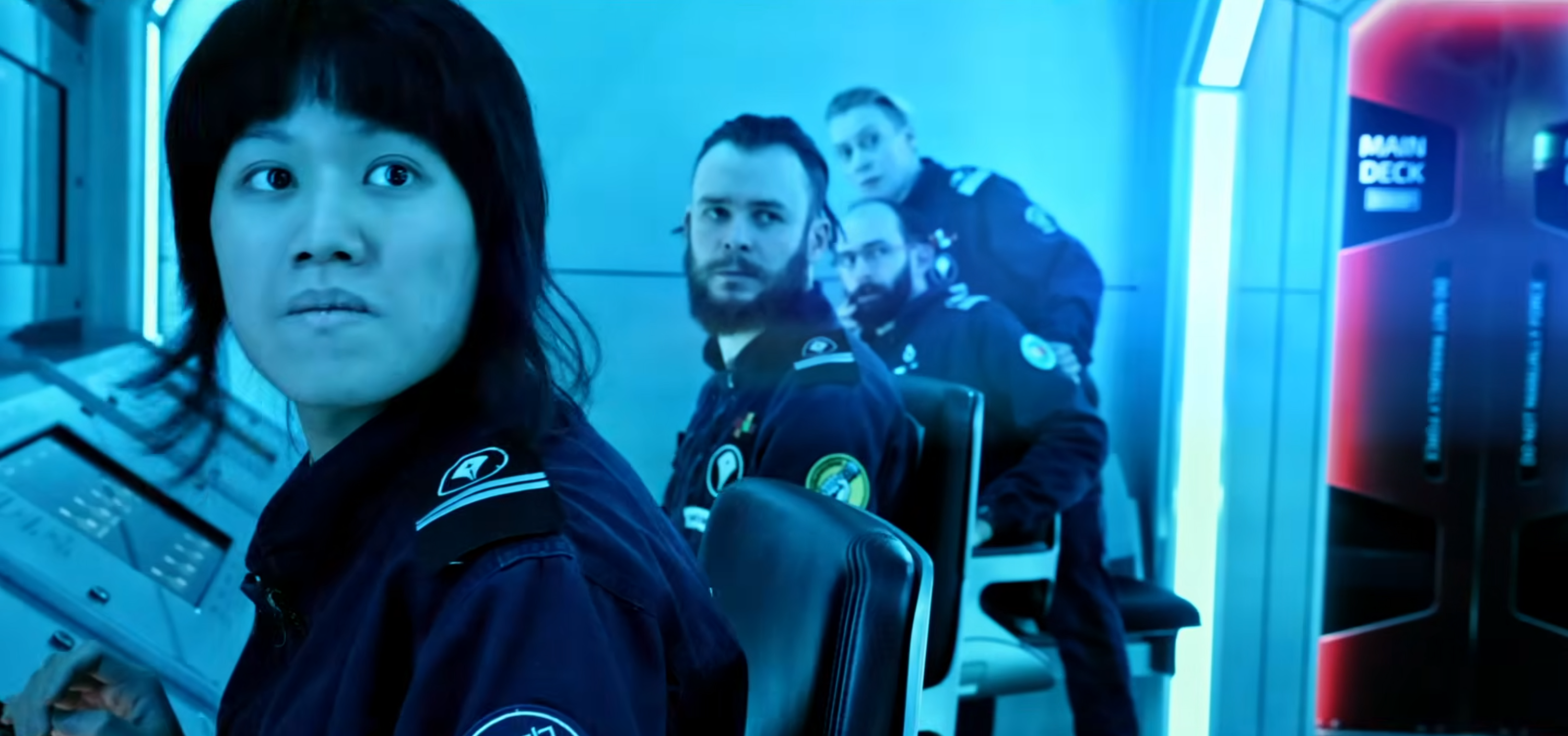
I took part in two Frontline missions on the first day Bridge Command made them available, essentially back to back on a Tuesday evening. While the new format is still young, I wanted to share my first impressions on this new content direction, given my level of investment in Bridge Command as a narrative setting to explore.
I will acknowledge my biases, I was a little dubious of Frontline Missions appeal prior to their debut. Of the standard mission types offered at Bridge Command, Military Missions are typically my least favorite option due to their relative lack of narrative and opportunities for conversations and diplomacy. Bridge Command is built on top of a program called Empty Epsilon, and that program is definitely designed first and foremost for combat bridge simulations, but combat is just typically not the most appealing part of the Star Trek bridge crew fantasy for me.
I had assumed that Frontline Missions would be basically Military+ missions, a little harder of a fight but otherwise traditionally military in nature. That assumption isn’t exactly wrong, but it does these missions a disservice. They’re more fun in terms of combat than most military missions, with some obvious room to explore other aspects of war depending on the deployment.
The first mission I took part in was pretty much what I expected – We flew out to the Horizon IMC Mining Facility and were tasked with helping to retake and protect a number of facilities vital for the mining and processing of fuel. It was basically a big space fight – fend off UVPs, protect the evacuation ships, attempt to destroy beacons if possible, but at the end of the day be bodies to distract the enemy away from damaging much needed vital infrastructure. The number of ships we were up against was uniquely overwhelming, and we had to keep track of multiple locations to defend, but what really elevated the mission was how the new format raised the stakes of the encounter.
Bridge Command missions generally take place in a sort of pocket universe or soft canon. If I take part in a mission it’s canon to me, but not to the first time visitor who hasn’t experienced it yet. There’s an expectation that spoilers won’t be shared, and that you’ll keep your canon events to yourself.
Bridge Command has tiptoed into broader canon impacts before – many special event missions for example are made canon after they’ve concluded, but generally consequences experienced on a mission will successfully dodge becoming long term canon.
This was different. If an IMC ship were to get destroyed, they wouldn’t be available for other crews to work alongside on their next deployment. If a station is blown up, that might make the sector permanently easier to take or retake. If we failed to protect our targets, everyone would know.
The consequences of Frontline Missions are public. You don’t have to be secretive about how your mission went because they’re unique one off deployments in theory. If you don’t keep a close enough eye on the battle, ships might be permanently lost that impact the entire fleet.
This additional degree of “broad canon” really did a lot to help take generally my least enjoyed mission type and raise it quite considerably up in my opinion. It turns out I am a much bigger fan of Bridge Command’s combat when there are stakes on the line, and we’re bombarded by UVPs relentlessly.

The second mission felt pretty different, and was the deployment that to me shone the brightest light on the potential of this new format.
What started as an escort mission, helping to lead IMC vessels carefully on a path between pockets of contested space, quickly became one focused on the medical horrors of war. Our crew managed to find a damaged ship and get their sole remaining crew member into our medical bay for relative safety, but they were hyperventilating pretty badly.
They were assessed as having multiple broken ribs, no fluid in their lungs, and needing to remain conscious. As such one of our crew held a sock to a head wound to stem some bleeding, while I threw countless questions at our rescued member of the IMC, trying to ensure he stayed awake. I had to listen to his breathing, make judgement calls on if changes in breathing were him calming down or starting to internally drown, and keep him awake and alert when all he wanted to do was pass out.
This was the kind of thing I was hoping to see in Frontline Missions, an exploration of aspects of war that are not simply the relentless onslaught of us VS alien ships. War can mean a lot of things: there’s no reason a frontline mission couldn’t be a diplomatic mission to convince pirates to let us pass trade routes through their space, or an intrigue to find a mole, or an exploration to find out about something new and interesting spotted out in space. This medical element to a mission felt like a good sign that the format does have room to stray from pure combat in focus.
One element promised in the marketing for Frontline Missions, but which I have yet to see really come to the surface, is the promise of coordinating fleet movements and issuing commands to other friendly vessels. This is definitely something I have seen Bridge Command offer before, it worked well in both the recent Wargames special event and PVP combat scenarios. On paper this should help to give Comms more of an active role during combat heavy encounters, if it’s a regular aspect of this new mission type.
When the second mission was over, there was this really unique vibe that has previously been somewhat absent at Bridge Command. Our crew post debrief filed out into the Mess to be met with a group of people crowded around a TV showing war updates on the galactic map. We were quickly met with people asking how our mission went, wanting specific updates, while watching to see the map update and show what we had achieved. Unlike most other Bridge Command content I felt relatively safe to talk openly about our adventure, knowing that its impacts were now canon to the overall war effort.
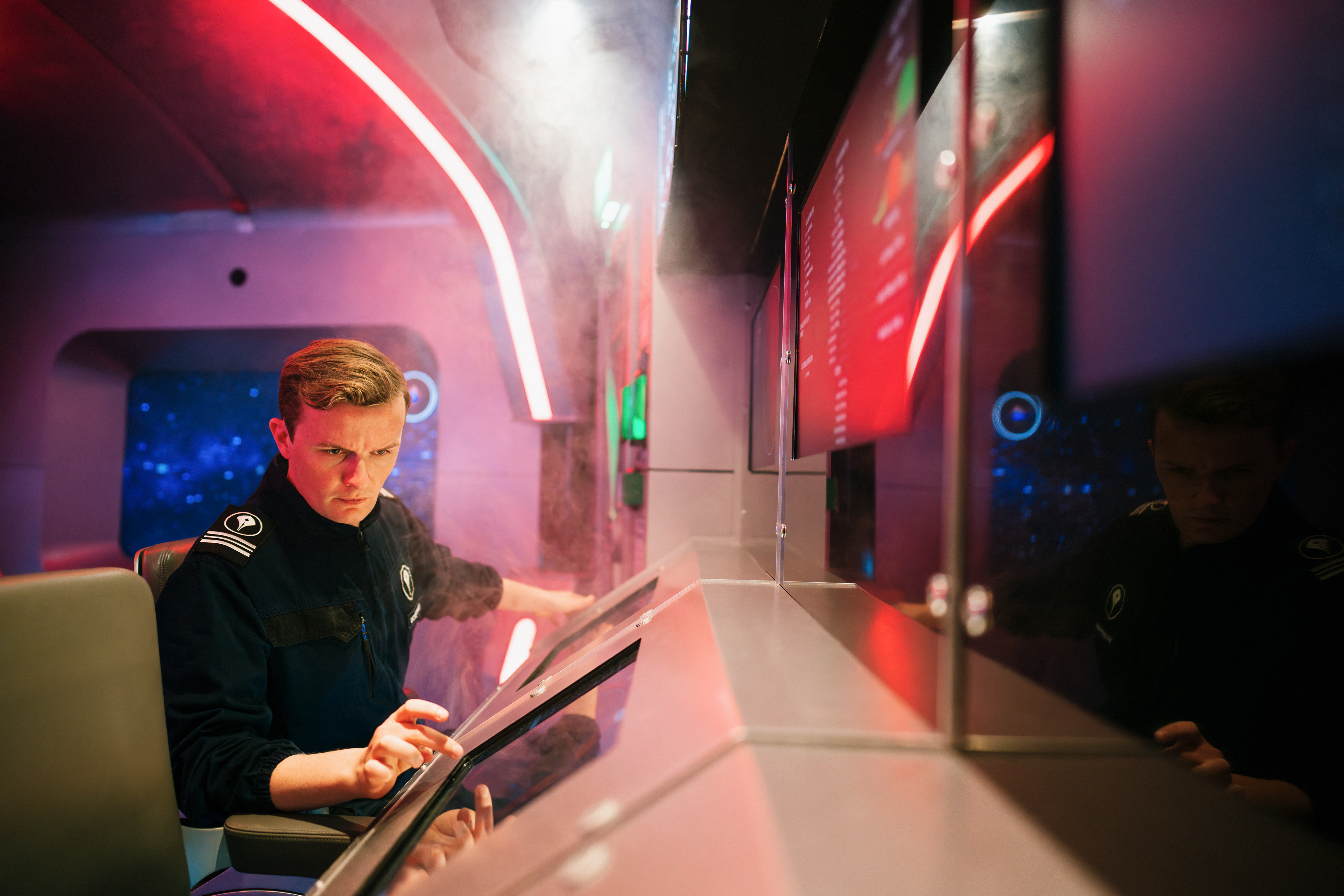
Bridge Command’s Frontline Missions do seem promising, but my praise comes with a little healthy caution. The appeal of the mission type will live and die based on the creativity of Bridge Command’s creative team, and their ability to come up with polished and rewarding missions that feel unique, without burning out staff in the process of trying to keep up with demand.
I experienced two interesting and distinct missions, but I also did both my missions on day one of the war when ideas are likely most fresh. The meta narrative for the day made sense, attempting to punch a hole from west to east across UVP territory to allow the human fleets to traverse to cut off locations was a clear goal. Protecting Horizon’s ability to produce and refine Gravium was crucial to the war effort. Everything felt productive to the war.
Will Bridge command be able to continue to create missions that feel distinct on a regular basis? Will they be able to have sectors of space retaken by UVPs off screen without it feeling cheap to extend the war? Will there be scope to properly explore the non military aspects of war, and will player expectations be set well for that?
Additionally, I see the seeds of a potential FOMO / obsession cycle brewing that could cause a player to take on more Frontline Missions than is reasonably affordable for them.
Bridge Command’s service record system, viewable online, shows a record of every mission, medal, and rank achievement a player has achieved within Bridge Command. Following your first Frontline Mission the service record adds access to a short written summary of each frontline deployment, as well as a map with a star on each sector of the war map you’ve successfully won a deployment on.
I am very aware that, upon seeing that map, my first instinct was to want to get a star on every hex. That is not an affordable or achievable goal, but I could very quickly feel the obsessive mental goblins getting their claws into my head.
However, with those caveats aside, I do think that Frontline Missions are a solid way to provide more content to long term players, as well as use the UVP war storyline to create a sense of shared community engagement in a single canon narrative.
One of the biggest issues I have with Bridge Command Campaign 3: Into the Barrens is how strongly it silo’s player knowledge away into these private little bubbles. By contrast, Frontline Missions really do provide a much needed sense that, from ensign to commander, we’re all in this together.
Categories: Gaming


Recent Comments